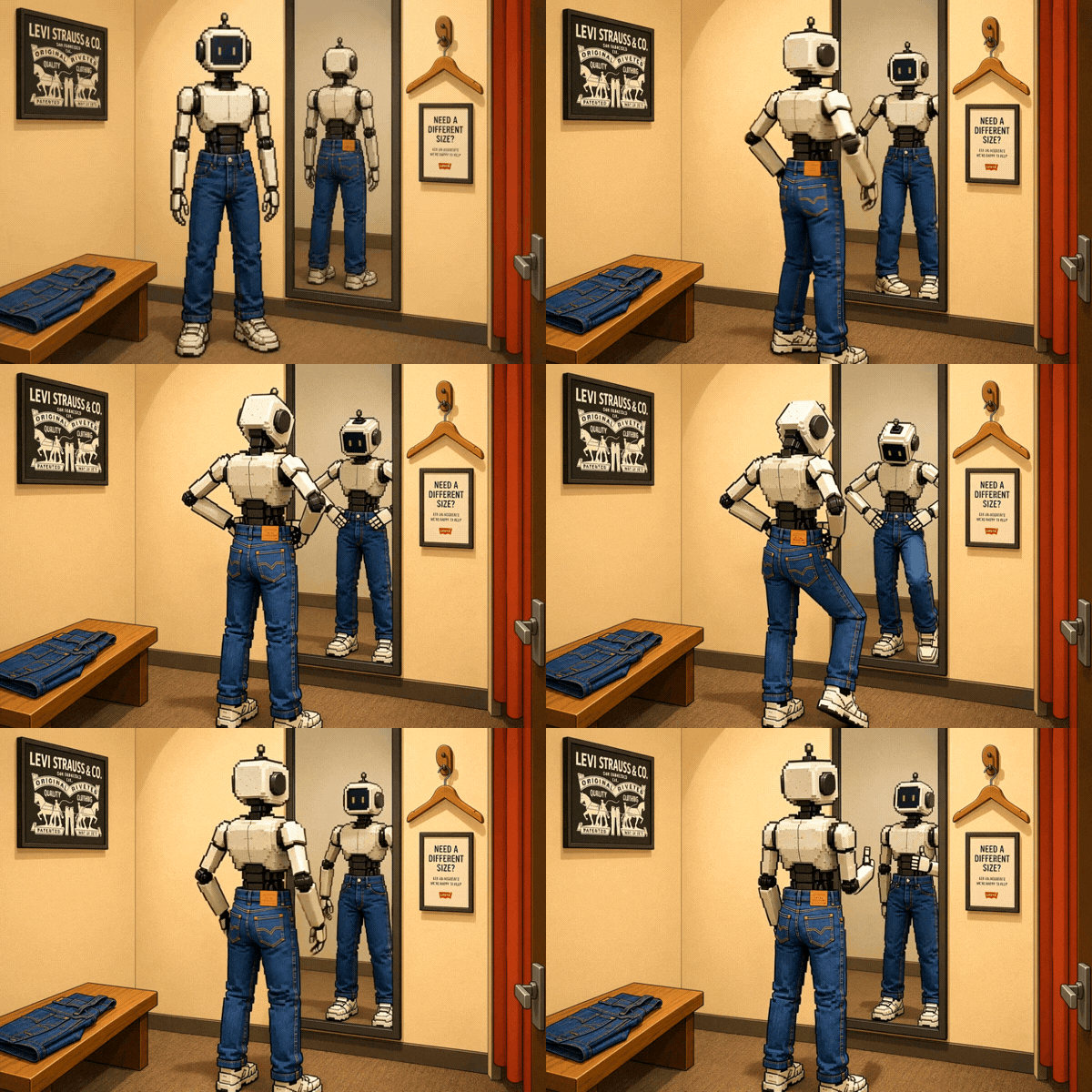
Levi Strauss & Co. (NYSE) reported its Q2 2026, with organic net revenues up 6% and direct-to-consumer revenue up 8%. The company also delivered 17% e-commerce growth, expanded adjusted EBIT margin by 70 basis points to 9%, and raised its full-year revenue and EPS outlook for the second consecutive quarter.
Management cited momentum across technology and infrastructure as the core of the company’s move into a direct-to-consumer (DTC) first lifestyle company.
Chief Financial and Growth Officer Harmit Singh noted progress on distribution network modernization and the company’s global enterprise resource planning (ERP) transformation, including the migration of Asia regional operations and Beyond Yoga brand onto a new global platform. He said the single ERP will improve data access and create a foundation for AI and automation globally.
Why It Matters: Levi Strauss showed how infrastructure modernization can support retail growth. The company is using platform consolidation, fulfillment modernization, and customer data to strengthen operational visibility and customer engagement. Its technology agenda supports DTC growth, inventory performance, service levels, and future AI use.

- ERP Consolidation: Singh said the company reached “a major milestone” by migrating Asia and Beyond Yoga onto its new global platform after completing the North America transition. Europe and the remaining Latin American countries are expected to move onto the platform by mid-2027. Once complete, the company expects to operate on a single ERP that supports the DTC-first model and global AI and automation use.
- Data Access: The change was described as moving “from a very disjointed, customized ERP system to a standardized ERP system that’s on the cloud.” He said the project is “about unlocking data” and giving users timely access regularly. He said he can now view operational activity on an iPad in ways the company previously could not.
- Omni-Channel Distribution: Levi Strauss completed the remap of Europe to an omni-channel distribution network by consolidating e-commerce fulfillment into distribution centers in Germany and the U.K. Management said the change is producing benefits in efficiency and European profitability. In the U.S., Levi Strauss remains on track to close its Hebron distribution center by the end of the third quarter and to move related operations to its Groveport, Ohio, center, which is operated in partnership with Maersk. The company expects the transition to simplify its distribution model and improve inventory and service levels.
- E-Commerce and Loyalty: Executives reported 17% e-commerce growth in the quarter, driven by stronger online performance following a reduction in promotional activity. The company is also using its loyalty program to support that digital momentum, adding 3 million members and bringing global membership to nearly 50 million. CEO Michelle Gass said the company is enhancing the program through “more personalized experiences” and using data to create more relevant consumer interactions.
- AI Readiness: Singh linked ERP consolidation to AI readiness, saying the single global platform will create “the foundation to scale AI and automation globally.” In the Q&A, he added that the ERP effort “really helps us leverage AI because of the data unlock.” These comments directly show how the company is approaching data standardization and cloud infrastructure in relation to future digital capabilities across retail and operations.
Go Deeper -> Levi Strauss’s Earnings Report – MarketBeat
Our Latest CIO Field Notes
FedEx Freight Puts AI and Platform Modernization at Center of Growth Plan
Data-driven delivery.
AI Memory Shortage Ignites Micron’s Record Results in Q3
Into the stratosphere.