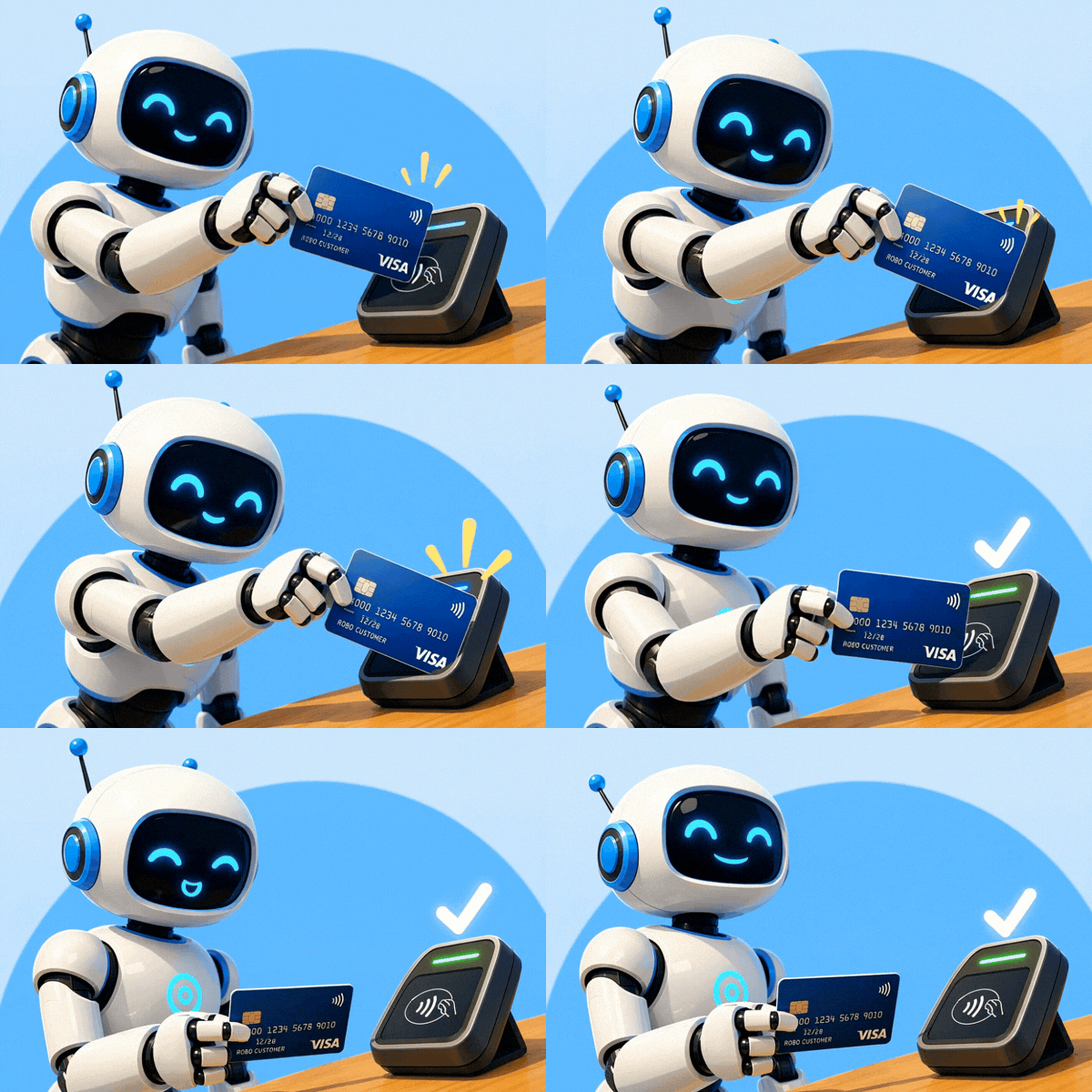
Visa (NYSE:V) reported strong fiscal third-quarter 2026 results, with net revenue climbing 14% year over year to $11.6 billion and earnings per share rising 11%, topping expectations. Payments volume exceeded $4 trillion for the first time in company history, while processed transactions grew 10%.
Consumer spending, commercial payments, money movement, and value-added services all contributed to the quarter, giving management confidence in the business heading into the final quarter of the fiscal year.
Technology dominated much of the conversation, with executives describing how artificial intelligence is changing the way Visa builds software, secures its network, and develops new payment experiences. They also discussed cloud-native banking through Pismo, stablecoin infrastructure, agentic commerce, and partnerships with OpenAI and Meta as the company expands the technology supporting its payments network.
Why It Matters: The discussion centered on enterprise AI moving beyond chatbots and productivity tools into software engineering, infrastructure, and platform architecture. Management connected AI adoption with faster development cycles while continuing to invest in payment technologies that support new transaction models, bringing operational AI and long-term infrastructure planning into the same conversation.

- AI Reshapes Software Development: Artificial intelligence is changing how Visa builds software. CEO Ryan McInerney said the company has moved from using AI for individual productivity to deploying agentic AI that can complete engineering tasks under human supervision. Visa reorganized engineering into smaller “agentic squads,” leading to 80% more code commits, cutting requirements development from about 30 days to five days, and reducing feature delivery time by more than 65%. McInerney summarized the effort by saying, “AI is changing how work gets done at Visa.“
- Building the Foundation for Agentic Commerce: Visa devoted significant attention to agentic commerce and the technology needed to support it. The company introduced Agent Score, Agent Directory, and the Token Assurance Framework to help establish identity and trust for AI-driven purchases. Executives also discussed new partnerships with OpenAI and Meta that connect Visa’s payments network, tokenization technology, and security capabilities with AI systems that can shop and complete transactions on behalf of users.
- Expanding Stablecoin and Cloud-Native Banking Infrastructure: Digital currency infrastructure remains an important area of investment. Visa launched the Visa Stablecoin Platform to support stablecoin issuance, wallets, settlement, and programmable payments. Management also discussed participation in OpenUSD and plans to connect those capabilities with Pismo, its cloud-native banking platform. The company introduced DPS Full Service Credit during the quarter, bringing together DPS and Pismo to provide issuer processing for banks and fintechs through a single platform.
- Applying AI Across Security and Payments: AI is also appearing across Visa’s products and security portfolio. Executives discussed AI-powered financial assistants for banking clients, updates to CyberSource’s Unified Checkout experience, AI-supported consulting services, and new fraud and risk capabilities. Visa also released the Visa Vulnerability Agentic Harness on GitHub, giving developers an open-source cybersecurity tool built to identify and evaluate software vulnerabilities with AI assistance.
- Connecting AI Across the Business: Management described AI as technology woven throughout the company instead of a single initiative. Visa said it now operates more than 150 AI-powered applications and delivered more than 300 major product releases during the past year. AI now spans engineering, payments, security, cloud infrastructure, and developer tools, with the company using it to build software faster while expanding the technology that supports digital commerce around the world.
Go Deeper -> Visa’s Earnings Report – MarketBeat
Our Latest CIO Field Notes
IBM Expands AI, Quantum, and Security Despite Q2 Execution Challenges
Big blue bounces back.


Netflix Uses AI to Increase Output and Cut Production Time
Setting the stage.