




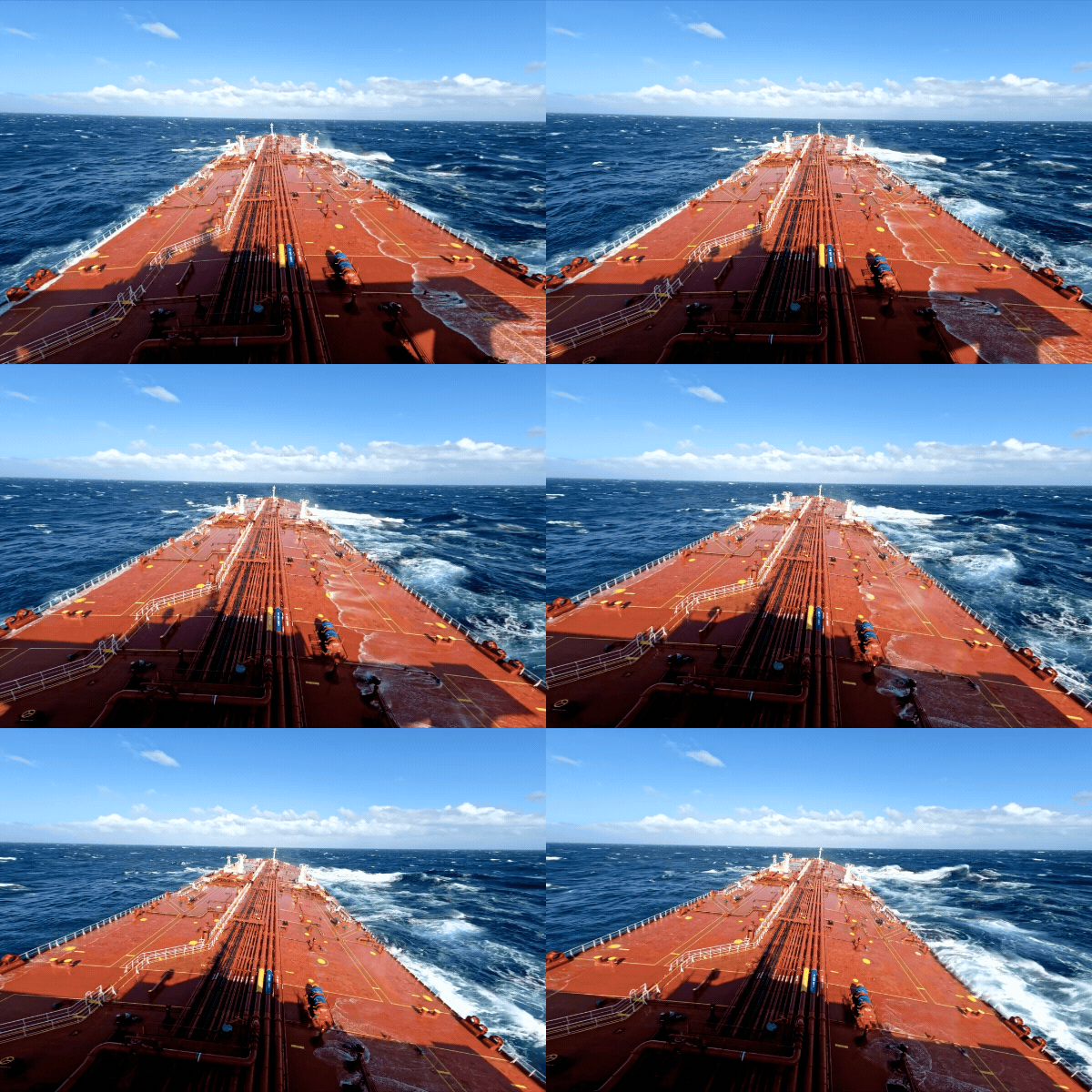
At least two foreign tankers headed for the United States were targeted in cyberattacks near Europe, prompting investigations by the U.S. Coast Guard and FBI.
Federal teams boarded the vessels in the Gulf of Mexico in August to examine their IT and operational technology systems for signs of compromise, including one tanker bound for Galveston, Texas.
The attacks happened earlier in the journey, near the Strait of Gibraltar, while the vessels were carrying oil and liquefied natural gas. U.S. authorities have not identified who was responsible and say there were no reported operational disruptions, injuries or environmental damage.
Why It Matters: The attacks add cyber risk to an energy supply chain already dependent on a small number of major shipping routes. A disruption to the technology aboard these vessels could affect more than the ship itself, bringing cybersecurity into business continuity planning for companies that depend on the energy moving through those routes.
- Federal Teams Boarded Two Tankers: Coast Guard and FBI teams boarded the vessels in separate operations on Aug. 21 and Aug. 24 after finding indications that foreign cyber actors had compromised their networks. The Aug. 21 response included Coast Guard cyber specialists, law enforcement personnel, a vessel inspector and FBI cyber operators who worked with the crew and corporate operator to investigate and remove the threat.
- One Ship Went Offline for 30 Hours: Identified by its operator as the VL Prosperity, the 333-meter Liberian-flagged crude carrier can transport roughly 2.3 million barrels of oil. The tanker was headed for Galveston when it reportedly lost communications for about 30 hours following an attack near the Strait of Gibraltar.
- Operational Technology Was Part of the Investigation: Modern tankers depend on connected systems for propulsion, navigation and cargo operations. Federal teams examined the vessels’ operational technology alongside their IT systems after the attacks, looking for signs that the compromise had reached technology responsible for running the ships.
- Gibraltar Handles Heavy Shipping Traffic: Roughly 300 ships travel through the Strait of Gibraltar each day, using the waterway to move between the Mediterranean Sea and Atlantic Ocean. Its importance to global energy shipments makes cybersecurity aboard vessels passing through the area a concern for shipping operations and the companies that depend on those supply routes.
- Attribution Remains Unresolved: U.S. authorities have not determined whether Iran or another foreign actor was responsible. Iranian state media began reporting on the VL Prosperity incident after the attack and later published claims about cyber operations against U.S.-linked shipping. U.S. officials have not verified those claims.
Go Deeper -> U.S. Probes Cyberattacks on Energy Tankers Bound for American Coast – WSJ
Coast Guard, FBI boarded Texas-bound commercial oil tanker to investigate cyberattack – CBS News