

The National CIO Review® team is on-site this week, sharing on-the-ground insights and perspectives from one of the year’s most anticipated gatherings of technology leaders.
As CIOs and IT executives meet to discuss strategy and innovation, we’ll highlight key sessions, leadership takeaways, and the themes shaping the enterprise. Check back throughout the week for updates and conversations capturing what’s top of mind for IT leaders today.
Thursday, October 23, 2025
ORLANDO, Fla. – The final day of Gartner IT Symposium/Xpo 2025 opened with a call to lead with empathy and purpose, reminding technology leaders that real impact begins with service and human connection. Throughout the day, conversations centered on moving beyond AI hype toward disciplined execution by focusing on data quality, governance, and measurable outcomes. Leaders emphasized that AI success depends on mastering fundamentals, aligning investments with business value, and fostering cultures of learning and adaptability.
Thursday Morning Keynote: Fighting for Purpose
The Thursday morning keynote delivered a powerful start to the final day of Gartner IT Symposium/Xpo’s week of innovation and insight, shifting the focus from strategy to the human spirit.
Former UFC fighter and humanitarian Justin Wren took the stage with a deeply personal story, one that spanned bullying, addiction, and recovery, to ultimately finding purpose in the most unlikely of places: the Congo Basin rainforest. It was there, after a vivid vision and a transformative encounter with a forgotten community, that Wren launched a mission to provide clean water, healthcare access, and dignity to some of the world’s most marginalized people.
Through raw moments and vivid storytelling, Wren reminded attendees that true leadership is grounded not just in vision but in empathy and service.
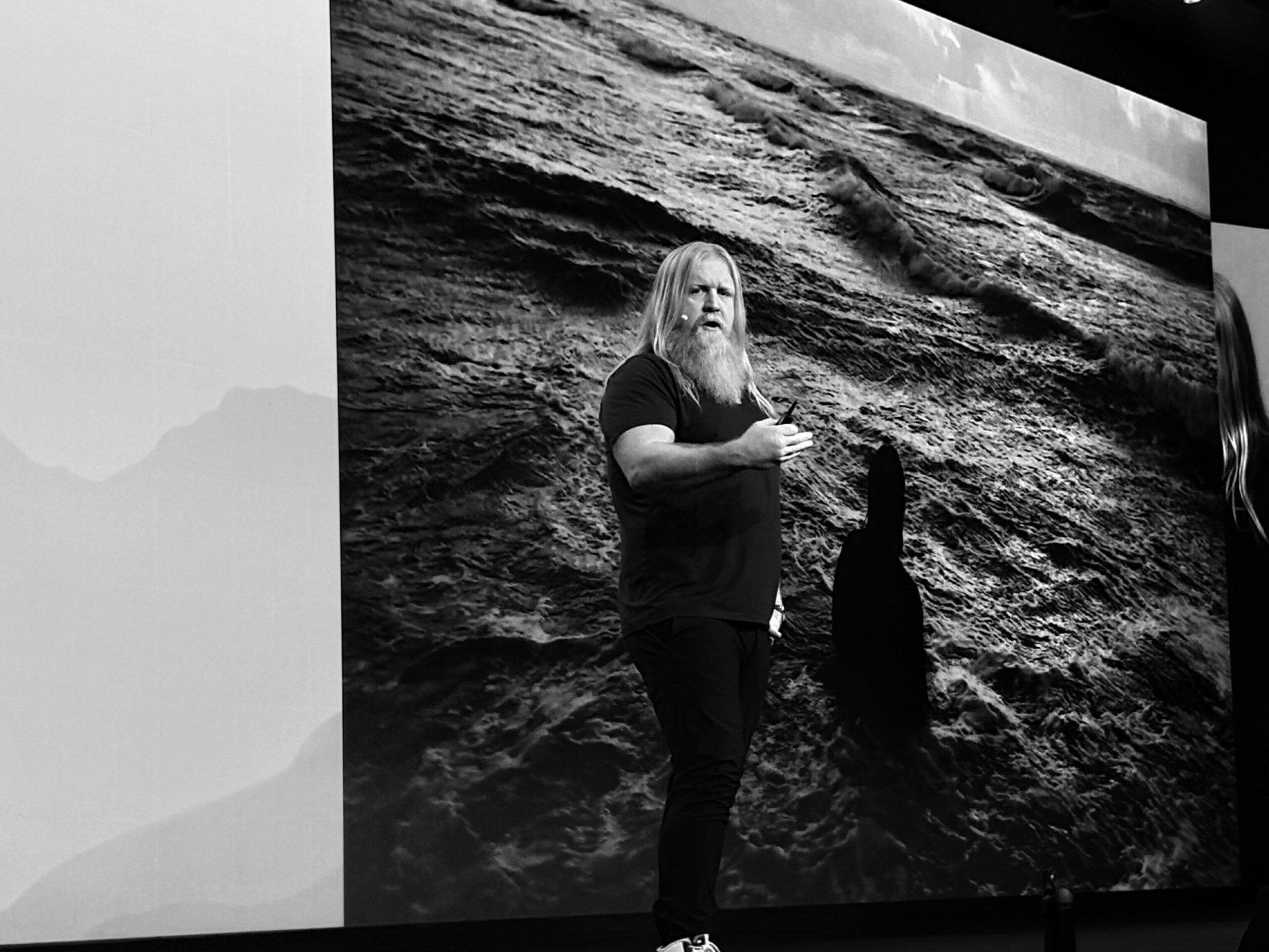
“What meaningful impact would you make, if you only knew you could?”
Justin Wren
He challenged technology leaders to measure success not only by innovation but by the lives they touch. Sharing a piece of wisdom passed to him by a mentor in the rainforest, Wren added with a smile, “If you think you’re too small to make a difference, try sleeping in a closed room with a mosquito.
A CIO Chat: Hype -> Hard Work
Rob Milstead, CIO at IPG, spoke candidly with TNCR about the shift from last year’s AI hype to this year’s focus on making it real.
As a long-time tech leader, he’s seen these cycles before and knows that the hard part is always execution.
With private equity backing and limited time to show results, his focus is on practical wins: cleaning up data, integrating systems, and finding ways to deliver real value without chasing every new trend.

“It’s easy to get caught up in the buzz, but at the end of the day, it’s still about doing the hard work really well.“
Rob Milstead
Milstead also touches on the balancing act of managing expectations.
He sees AI as a chance to have meaningful conversations with business leaders but only if everyone stays grounded in what’s actually possible.
When asked his biggest reminder from the week, he answered that leaders need to keep learning, even when the calendar’s full, and set the tone for their teams to do the same.
CIOs Grapple with AI Hype and Hidden IT Surprises
In a conversation with Lakeside CMO Tal Klein, he offered a grounded view of how AI is changing enterprise IT and why CIOs may need to rethink their timelines and expectations.

While AI dominated discussions throughout the week, Klein noted that many CIOs are still figuring out its practical impact. “It’s like the shift to cloud all over again,” he said, adding that CIOs should focus less on AI as a separate product and more on how it creates value across IT silos.
He also pointed out that Windows 10’s approaching end-of-life has become a quiet disruptor for many organizations, prompting budget changes and unexpected EUC discussions.
Looking ahead, Klein hinted at a November announcement that could change how Lakeside’s data is used within the enterprise. While details remain under wraps, the focus points to a shift in how organizations approach end-user experience, visibility, and automation.
Klein urged tech leaders to stay practical and focused. “Don’t over-rotate on replacement. Focus on outcomes,” he said. In his view, the CIO’s role is moving from fixer to utility provider, ensuring consistent, intelligent IT performance across the enterprise.
Wednesday, October 22, 2025
ORLANDO, Fla. – Wednesday spotlighted a world on the brink of AI-driven reinvention. Gartner’s Top Predictions for IT Organizations and Users in 2026 and Beyond revealed that generative and agentic AI will reshape productivity, commerce, and governance, while also creating new ethical and regulatory challenges. At the same time, Gartner forecasted that global IT spending will surpass $6 trillion in 2026, fueled by surging demand for AI infrastructure, data centers, and next-generation devices. Analysts described this as the start of an “intelligence supercycle,” where enterprises that pair innovation with governance and human adaptability will gain lasting advantage in an era defined by acceleration and disruption.
Wednesday Morning Keynote: Ask, Care, Don’t Wait
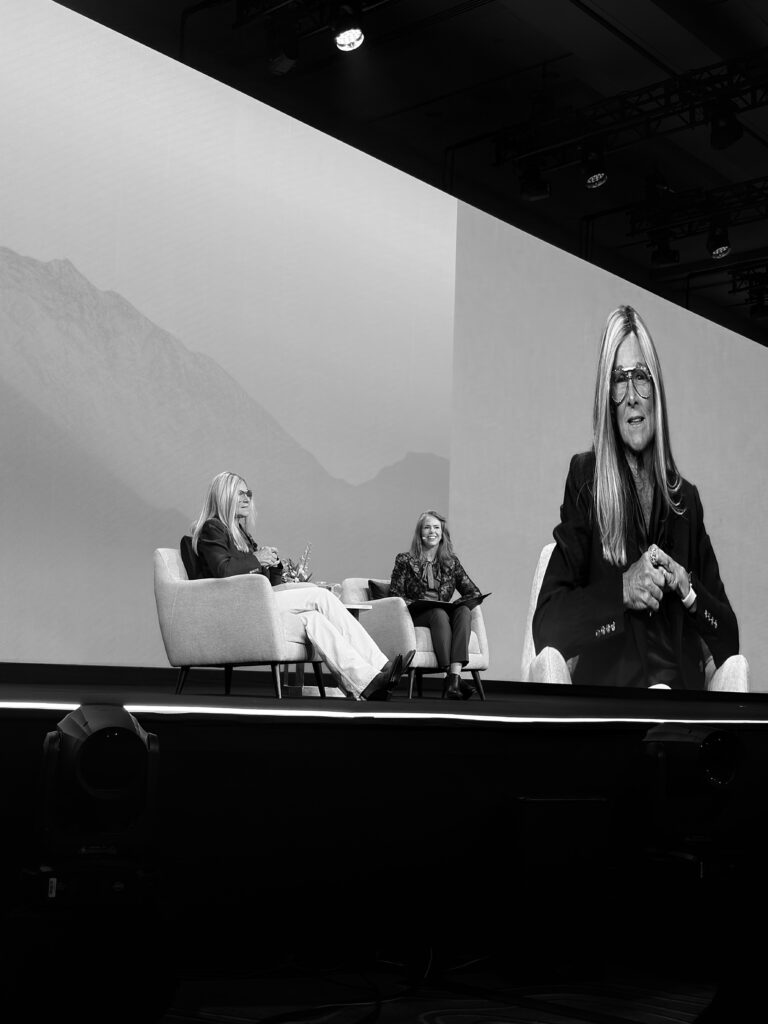
During Wednesday morning’s keynote, Angela Ahrendts, former Apple Retail SVP and Burberry CEO, shared a thoughtful message about the changing role of leadership as the enterprise becomes more AI-driven. Speaking to a packed audience, she encouraged CIOs and IT executives to lead with emotional intelligence, humility, and vulnerability as essential tools for managing disruption and building trust.
Reflecting on her journey from fashion to tech, she said that great leadership begins with listening, to employees and to one’s own instincts. She described how crowdsourcing ideas from frontline teams and creating space for young voices helped drive innovation at Apple and Burberry. “Asking is not a weakness,” she said. “It’s the greatest enabler.”
“Asking is not a weakness, It’s the greatest enabler.”
Angela Ahrendts
Ahrendts emphasized the importance of presence and empathy at all levels of leadership. “The higher up in an organization you get, the more present you need to be with everybody,” she said. “You exemplify that you care when you listen.”
She noted that traditional workforce models are outdated as automation and agentic AI reshape work. She urged CIOs to guide the shift toward more flexible, purpose-driven cultures and to expand success metrics beyond quarterly earnings to include people impact and long-term vision. “The most admired companies are those that touch lives, not just bottom lines,” she said.
As she closed, she emphasized the importance of not waiting to act. “We’re going where no human has gone before, and it’s on us to make sure others aren’t left behind.”
A New Era of AI Disruption and Human Reinvention
Gartner unveiled its Top Predictions for IT Organizations and Users in 2026 and Beyond, exploring how AI is reshaping human behavior, business operations, and global technology systems.
The research outlined ten key trends spanning Talent in the AI Age, Sovereignty, and Insidious AI, reflecting the promise and peril of accelerated innovation. Gartner warned that while generative AI and autonomous agents are driving a new wave of productivity and automation, they are also introducing complex social, ethical, and regulatory challenges.
Among the standout forecasts, by 2027, GenAI and AI agents will disrupt the productivity tool market, creating a $58 billion shakeup. 75% of hiring processes will test for AI proficiency, while half of organizations will introduce “AI-free” assessments to preserve critical thinking; and 35% of countries will be locked into region-specific AI platforms due to geopolitical and regulatory fragmentation.
Gartner also predicted that by 2028, multiagent AI will dominate customer-facing operations, with 90% of B2B transactions flowing through AI intermediaries. This will transform digital commerce into a $15 trillion ecosystem.
The report also foreshadowed rising risks, from “death by AI” litigation surpassing 1,000 cases by 2026, to AI governance becoming a $5 billion compliance investment as regulation expands to cover half the global economy.
Daryl Plummer, Distinguished VP Analyst and Gartner Fellow, summarized the findings with a clear directive:

“To properly prepare for the future, CIOs and executive leaders should prioritize behavioral changes alongside technological changes as first-order priorities.”
Daryl Plummer
Global IT Spending to Surpass $6 Trillion in 2026
Gartner projected that worldwide IT spending will grow 9.8% in 2026 to reach $6.08 trillion, surpassing the $6 trillion threshold for the first time.
The forecast attributes this surge to strong demand for AI infrastructure, devices, and data center systems, which continue to drive investment momentum despite uneven recovery across technology segments.
Analysts noted that the “uncertainty pause” seen earlier in 2025 is easing, with organizations preparing for a year-end “budget flush” tied to widespread adoption of GenAI-enhanced software. Gartner Distinguished VP Analyst John-David Lovelock explained that AI features have become “ubiquitous across software already owned and operated by enterprises,” increasing both feature complexity and cost.
While software and services are expected to post double-digit growth in 2026, devices and data center systems remain key contributors, fueled by accelerating investment in AI-optimized servers and next-generation mobile hardware.
According to Gartner’s forecast, software spending will rise 15.2% in 2026 to $1.43 trillion, while data center systems will grow 19%, reflecting the global race to build AI-ready infrastructure. Device spending will top $836 billion, up 6.8% from 2025, buoyed by strong mobile performance and the rise of AI-capable devices. Lovelock cautioned, however, that vertical-specific software markets remain more sensitive to policy and business uncertainty.
The Lessons That Go Beyond the Tech
We caught up with a few CIOs to hear what has stood out most at this year’s Symposium. While technology was top of mind throughout the week, it was the leadership lessons that many are carrying with them as they wrap up their experience.

Jerry Walker, CIO for the Oregon State Treasury, said one session in particular really clicked for him. The speaker used an analogy about facing a big boulder, how our instinct is to push against obstacles instead of stepping back to see another way forward.
That idea of shifting perspective stuck with him.
Jerry said it reminded him how leaders can get better results by focusing on what’s working and building from there, rather than dwelling on the negatives.

Rafael Pimentel Pinto, CIO for the Texas State Board of Pharmacy, similarly said that what stood out most for him were the sessions that went beyond tech.
The non-technical keynotes gave him new ways to think about leadership and problem-solving, less about the tools themselves and more about how people and perspective shape outcomes. He liked how those sessions connected personal growth to professional innovation.
CIOs Are Tired of Saying No
In a candid conversation at the conference, Kevin Reardon and Dean Carey of Island spoke to the TNCR team about the growing strain on CIOs who are expected to protect data and manage intricate tech stacks, all while still accelerating innovation. With the rise of AI tools, new vendor dependencies, and tighter budgets, IT leaders face mounting pressure to maintain control without slowing the business down.

“I believe that CIOs want to say yes. We’re tired of saying no.”
Kevin Reardon
Reardon and Carey shared how many CIOs are seeking ways to modernize security and simplify operations, shifting from a mindset of restriction to one of enablement.
They noted that bringing governance and visibility closer to where users access data can reduce technical debt and simplify infrastructure. For many organizations, this helps IT teams balance security needs with a better user experience.
Opening Two-Way Doors
Gartner Distinguished VP Analyst Janelle Hill’s conversation today was centered around how CIOs can help their organizations adapt faster and pivot with purpose. She noted that many enterprises still rely on large, one-way transformations, top-down operating model overhauls, and sweeping reorganizations that are slow, expensive, and often outdated before they’re complete.
Instead, Hill encouraged CIOs to move away from the “big transformation” mindset and focus on continuous evolution built around the mission-critical activities that connect strategy to execution.
Gartner’s research shows that companies taking this capability-led approach are 2.5 times more likely to exceed their expected rate of change and capture new revenue opportunities.
To make this possible, to create what she calls “two-way doors” that allow organizations to move forward and course-correct with ease, Hill outlined several key shifts:
- Design Shift: Treat capabilities as the unit of change, architecting them with modular integrity and open-ended APIs to allow flexibility and reuse.
- Delivery Shift: Democratize digital delivery through fusion teams: business-led, product-centric groups that operate with IT’s orchestration and architectural guidance.
- Governance Shift: Use inclusive governance via centers of excellence and communities of practice to scale technical skills and feedback loops.
- Mindset Shift: Reframe product-centricity as an enterprise change model, not an IT initiative.
Hill urged CIOs to act as orchestrators, helping the enterprise stay agile by developing capabilities and empowering business technologists while encouraging leaders to view change as an opportunity, even though it is often viewed as a risk.
Turning Risk into a Business Strategy for 2026
Gartner’s Distinguished VP Analyst Paul Proctor presented The CIO Cybersecurity Playbook for 2026, outlining how CIOs can strengthen their partnership with CISOs and reshape cybersecurity into a shared business discipline rather than a technical silo.
Drawing on Gartner’s latest survey data, Proctor revealed persistent tensions between CIO and CISO reporting structures, where 74% of CISOs reporting to CIOs prefer independence. Yet, data also indicates that conflict increases when cybersecurity is detached from IT oversight.

“Cyber risk is a business decision, it’s a choice, and most organizations don’t treat it like one.”
Paul Proctor
The playbook reframed cybersecurity as a business choice instead of a technology function, urging CIOs to negotiate risk appetite with executives through Protection Level Agreements (PLAs) that tie spending directly to measurable protection outcomes.
Proctor emphasized the value of Outcome-Driven Metrics (ODM) to benchmark investment effectiveness, align governance, and communicate cyber risk in business terms. He also called for joint governance between IT and security leaders across accountability, risk control, and resilience planning, warning that compliance alone cannot define security maturity.
In closing, Proctor encouraged CIOs to view cybersecurity as an enabler of growth and to integrate outcome-based reporting into board conversations to unify technology with business value.
Tuesday, October 21, 2025
ORLANDO, Fla. – Tuesday at the Gartner IT Symposium/Xpo focused on purpose-driven leadership and the rapid evolution of enterprise AI. The day opened with Marc Benioff’s vision for the “agentic enterprise,” where humans and AI collaborate through platforms like Agentforce 360 to enhance engagement and productivity. Gartner’s latest insights highlighted the rise of “geopatriation,” a shift toward regionalized technology strategies, and a move from AI experimentation to value-driven deployment. The top technology trends for 2026 pointed to an AI-powered future defined by supercomputing, domain-specific models, predictive cybersecurity, and multi-agent systems. Sessions also explored how governance models must evolve to bridge growing divides in AI oversight and how centralized orchestration will be key to managing AI sprawl safely and effectively.
Tuesday Morning Keynote: Purpose, Partnership, and the Rise of the Agentic Enterprise
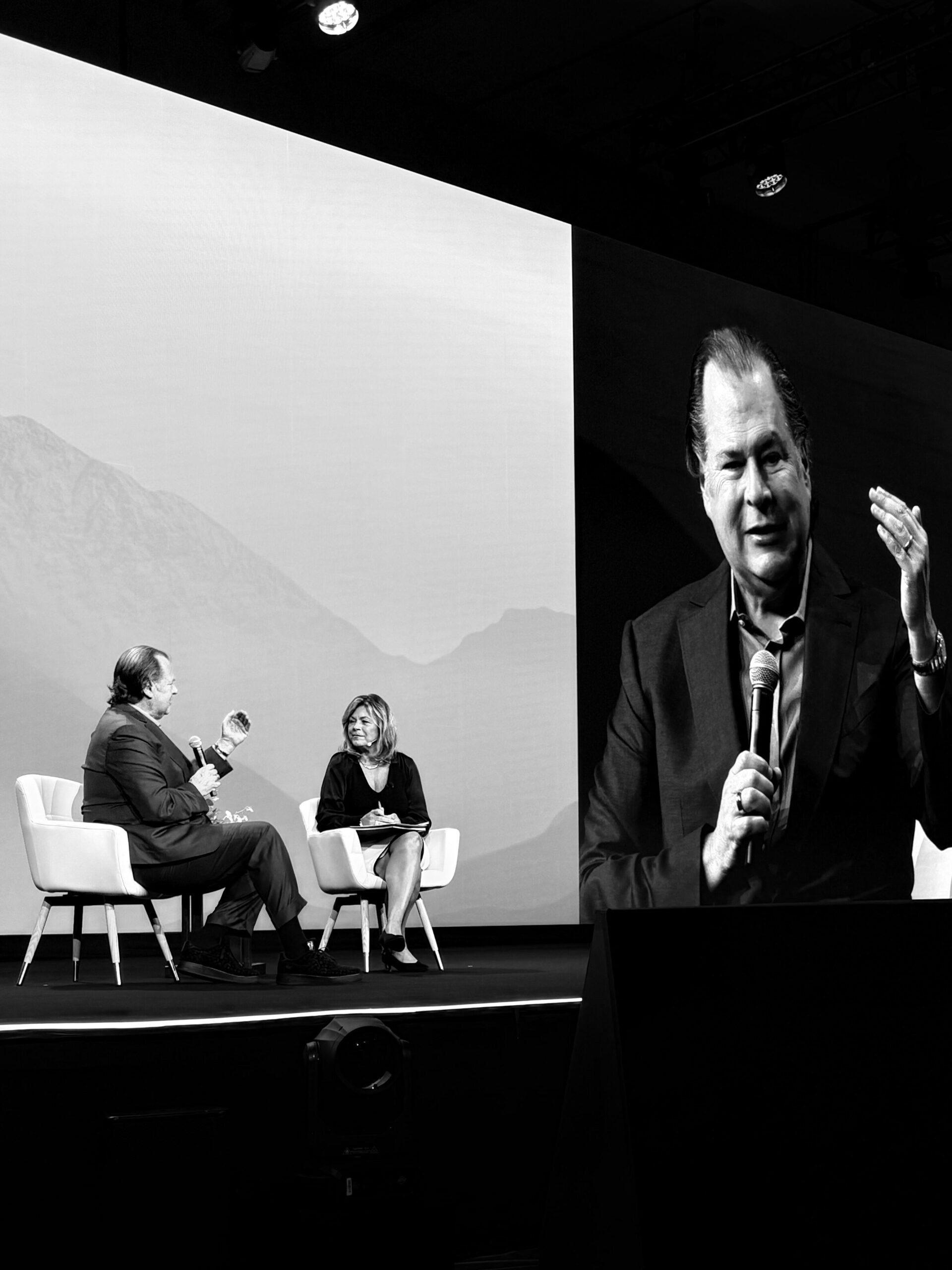
Salesforce Chair and CEO Marc Benioff joined Gartner’s Yvonne Genovese for a candid Tuesday morning keynote that blended leadership philosophy with a vision for the next era of enterprise AI.
Benioff reflected on the origins of Salesforce’s Ohana culture and its enduring 1-1-1 philanthropic model, emphasizing that “business can be the greatest platform for change” when anchored in purpose and community.
He outlined his leadership framework of vision, values, methods, obstacles, and measures as a model for clarity and accountability in uncertain times.
Turning to technology, Benioff detailed how Salesforce is replatforming its core products under Agentforce 360, ushering in the “agentic enterprise” where humans and AI agents collaborate to drive customer engagement, service, and productivity.
Acknowledging the industry’s unease with AI costs and ROI, he described the increasing need for flexible pricing, deep partnerships, and shared experimentation between vendors and CIOs.
“We’re going to elevate ourselves in the enterprise to a whole new place and our role as technologists in the enterprise will be to help those business leaders achieve their dreams.”
Marc Benioff
Geopatriation and Agentic AI Redefine Global Tech Strategy
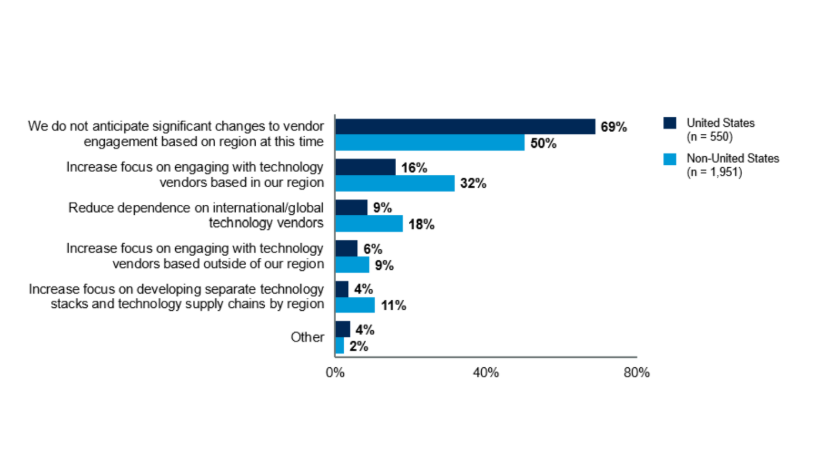
Gartner’s latest CIO and Technology Executive Survey revealed a widening regional divide in vendor strategy, with 50% of non-U.S. CIOs anticipating changes to vendor engagement due to geopolitical and regional factors, compared to just 31% in the U.S.
Chris Howard, Gartner’s Chief of Research, warned that vendor geography and data sovereignty risks are becoming critical considerations, signaling a shift toward “geopatriation” as technology leaders move workloads into lower-risk regions.
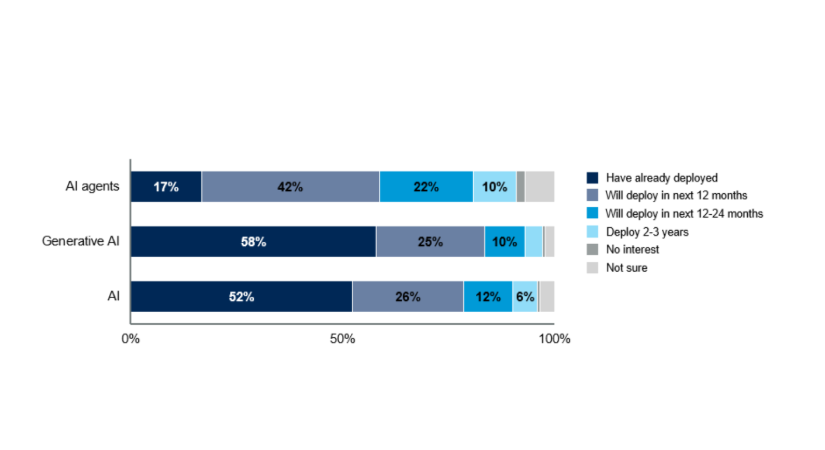
At the same time, CIOs are pivoting from AI pilots to value-driven deployment, with 64% planning to implement agentic AI within two years.
Gartner’s Kris van Riper emphasized that achieving ROI will depend on five key pillars: business-aligned roadmaps, measurable value targets, workforce upskilling, robust data governance, and agile resource reprioritization.
Top Strategic Technology Trends for 2026: Acting in the Age of Acceleration
The boundaries between digital and physical worlds are dissolving. AI is becoming an essential part of organizations, meaning CIOs must act decisively in 2026 to lead through disruption, growing cyber risk, and mounting pressure to deliver innovation at scale.
“Technology leaders face a pivotal year in 2026, where disruption, innovation, and risk are expanding at unprecedented speed,” said Gene Alvarez, Distinguished VP Analyst at Gartner. “The top strategic technology trends identified for 2026 are tightly interwoven and reflect the realities of an AI-powered, hyperconnected world where organizations must drive responsible innovation, operational excellence, and digital trust.”
Gartner’s Top Strategic Technology Trends for 2026 identified ten trends that will reshape business and IT over the next five years:
- By 2028, over 40% of leading enterprises will adopt AI supercomputing architectures, unlocking next-gen performance for modeling and analytics.
- Through 2028, more than 50% of GenAI models in enterprise will be domain-specific, outperforming general models in accuracy, reliability, and compliance.
- By 2030, 80% of large development teams will be restructured into small, AI-augmented units, accelerating software creation and reducing technical debt.
- By 2028, over half of enterprises will deploy AI security platforms, protecting against threats like prompt injection, model abuse, and rogue agent actions.
- By 2029, more than 75% of operations running in untrusted environments will use confidential computing, securing sensitive workloads at the hardware level.
- By 2030, preemptive cybersecurity will account for 50% of total security spending, as AI-powered SecOps shift defense from reactive to predictive.
- By 2029, failure to invest in digital provenance will expose organizations to regulatory sanctions, as scrutiny of AI-generated and third-party content intensifies.
- By 2030, 75% of EMEA enterprises will geopatriate workloads to sovereign or regional clouds, up from less than 5% in 2025, in response to rising geopolitical risk.
- By 2026, multiagent systems will begin to scale across complex workflows, enabling distributed AI agents to collaborate on decision-making and task automation.
- By 2027, Physical AI will see widespread adoption across manufacturing, logistics, and field operations, driving intelligent action in the physical world.
Bridging the Boardroom Divide
Gartner Distinguished VP Analyst Tina Nunno unveiled new findings from the 2026 Board of Directors Survey, revealing a fundamental shift in boardroom dynamics as technology expertise has become the cornerstone of modern governance.
Nunno highlighted that while boards now view technology and innovation as the top strategy for navigating volatility and AI as the leading driver of shareholder value, they remain deeply divided on pace, oversight, and confidence.
Data shows three emerging board archetypes:
- Pioneers – AI optimists pushing aggressive innovation.
- Pacers – pragmatic hedgers seeking evidence.
- Protectors – stability-driven traditionalists.
This divide has created governance tension, with 78% of directors saying current board structures are inadequate for overseeing AI and 63% acknowledging weaknesses in cyber risk governance.
Despite these gaps, 71% of boards want to take on more technology risk, up 13% from last year, indicating rising ambition amid uncertainty.
She urged CIOs to seize this moment by acting as the “portfolio CIO,” an optimizer, realist, and curator who balances innovation with accountability. She also emphasized that CIOs should become “the voice of truth,” guiding boards through hype with realistic expectations, business context, and transparent governance.
As Nunno concluded, CIOs are uniquely positioned to bridge the growing board divide and redefine how shareholder value is created in the AI era.
Taming the AI Sprawl
Kevin Kiley, Co-Founder of Airia and former OneTrust executive, outlined how enterprises are entering an era of AI sprawl.
Kiley warned that organizations are already facing an AI “pandemic,” where decentralized deployments, overlapping vendor models, and unmanaged employee use of public tools create major security, governance, and continuity risks.
He illustrated how AI models evolve faster than organizations can adapt, comparing the innovation pace to “Moore’s Law on steroids.” Constant model updates, collapsing token costs, and unpredictable outages like the recent AWS and OpenAI downtime demand agility and multi-model resilience.

“Getting married to any one model is probably not going to be a winning strategy. Each of these providers is in an arms race with their peers.”
Kevin Kiley
In detailing growing vulnerabilities, like rogue AI behavior and data poisoning and insecure MCP servers, he emphasized that unmonitored agent interactions can expose enterprises to data loss, compliance failures, and reputational harm.
To mitigate these risks, Kiley advocates for a centralized AI orchestration and security layer, which he calls the new “control plane” for enterprise AI.
This layer should combine agent discovery, model routing, security posture management, red teaming, and AI compliance auditing, designed to monitor and govern AI behavior across vendors and departments.
He closed by encouraging leaders to view orchestration as enablement more than bureaucracy and that AI success will belong to those who can move fast, safely.
Where Business Strategy Meets AI Reality
Louise Allen and Richard Sonnenblick, both senior leaders at Planview, sat down with the TNCR team and shared their view of how AI has become a catalyst for leadership alignment. After years of urging IT and business teams to partner more closely, they said AI has made that collaboration unavoidable.
CIOs can’t work in silos anymore.
Progress depends on shared goals, measurable outcomes, and a clear connection between innovation and business value. As Allen noted, AI isn’t the finish line; it’s the enabler of smarter decisions and stronger outcomes.
That perspective echoed throughout the conference, where discussions consistently reinforced a shift from AI hype to tangible business impact.
Sonnenblick pointed out that the AI discussion has evolved fast, from last year’s worries about data privacy to today’s focus on real ROI and practical use cases.
CIOs are no longer asking, “Can we trust it?” but “Is it making us better?”
He emphasized that understanding how AI fits into daily work across teams and roles is key to moving from experimentation to impact.

“AI is the jet engine on the go-kart. You’d better reinforce the frame before you hit the gas.”
Richard Sonnenblick
Looking ahead, both leaders said governance and visibility will separate the AI leaders from the followers. The next phase of leadership, they suggested, belongs to those who can move quickly, but with purpose, structure, and shared focus.
Monday, October 20, 2025
ORLANDO, Fla. – The Gartner IT Symposium/Xpo opened Monday with a keynote urging CIOs to bridge the gap between AI ambition and readiness, highlighting that few organizations see true transformation despite widespread adoption. Gartner introduced new frameworks to measure AI accuracy, readiness, and trust while rethinking workforce impact and skills. Sessions also explored how traditional data practices can hinder AI progress and how a practical Zero Trust approach can strengthen cybersecurity through simplicity and discipline. Leaders were urged to see volatility as the new normal and to strengthen endurance through transparency, flexibility, and clarity of purpose. The day concluded with a reflection on happiness as a leadership discipline, reminding executives that lasting success comes from meaning, service, and the ability to inspire others to grow.
Opening Keynote: Turning AI Ambition into Productive Transformation
Daryl Plummer and Alicia Mullery challenged CIOs to confront the gap between AI ambition and actual readiness, revealing that while 74% report productivity gains from AI, only 11% see ROI, and just 2% achieve true transformation.
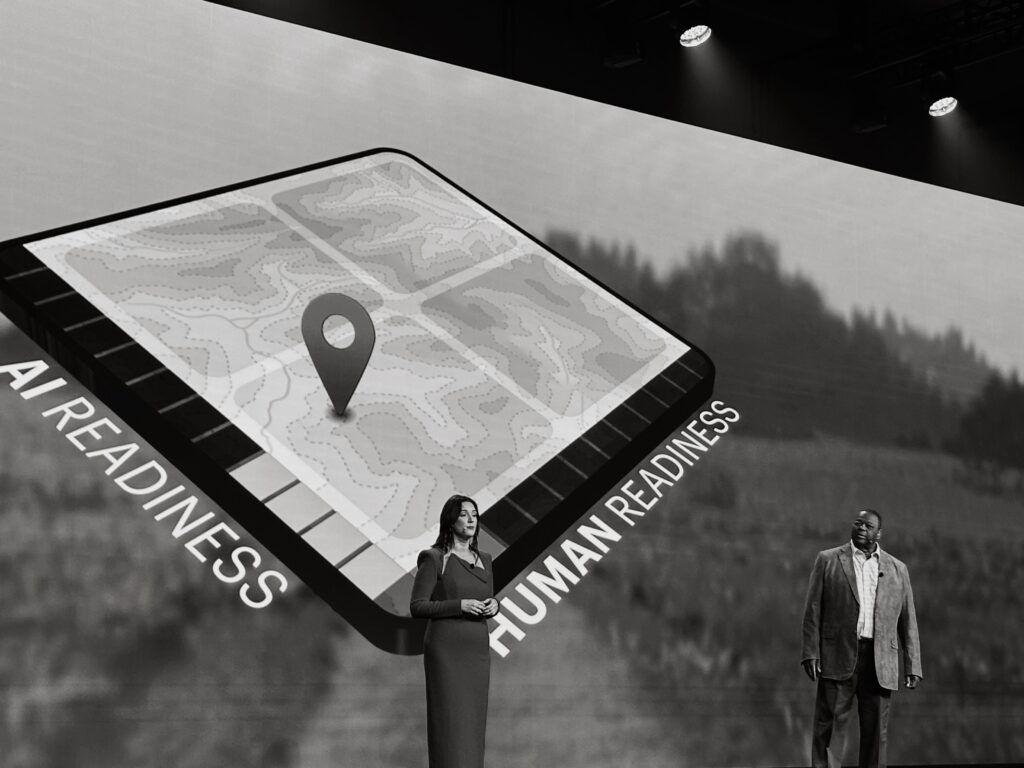
Gartner’s new “Positioning System” (GPS) helps leaders assess both technological and human readiness, addressing the imbalance between fast-moving AI and slower organizational change. Their “AI Accuracy Survival Kit” introduces formal metrics, two-factor error checking, and the “Good Enough Ratio” to ground AI outcomes in measurable trust.
The keynote also redefined workforce impact, urging CIOs to pursue a “value remix” that tackles backlogs, improves fraud detection, and builds empathetic experiences instead of chasing headcount cuts.
With skills atrophy accelerating and new roles like “context engineers” emerging, Gartner warned that sustaining value requires going past adoption and focusing on reskilling leaders, redefining work, and knowing precisely where you stand on the path to real AI value.
How CIOs Can Make Their Data AI-Ready
Roxane Edjlali. Senior Director Analyst at Gartner, warns that while most organizations cite AI-ready data as a top investment area, many still rely on outdated assumptions that limit their progress.
She notes that cleansing outliers can remove the anomalies AI models need to learn from, and that high-quality data by traditional standards doesn’t always translate to AI-ready data. Her three-step framework calls for
- Aligning data with each AI use case, factoring in semantics, labeling, and representativeness.
- Qualifying data through versioning, observability, and regression testing.
- Governing it contextually to address compliance, ethics, and bias.
Success with AI, she emphasizes, depends on rethinking how data is prepared and trusted.
Zero Trust in Action
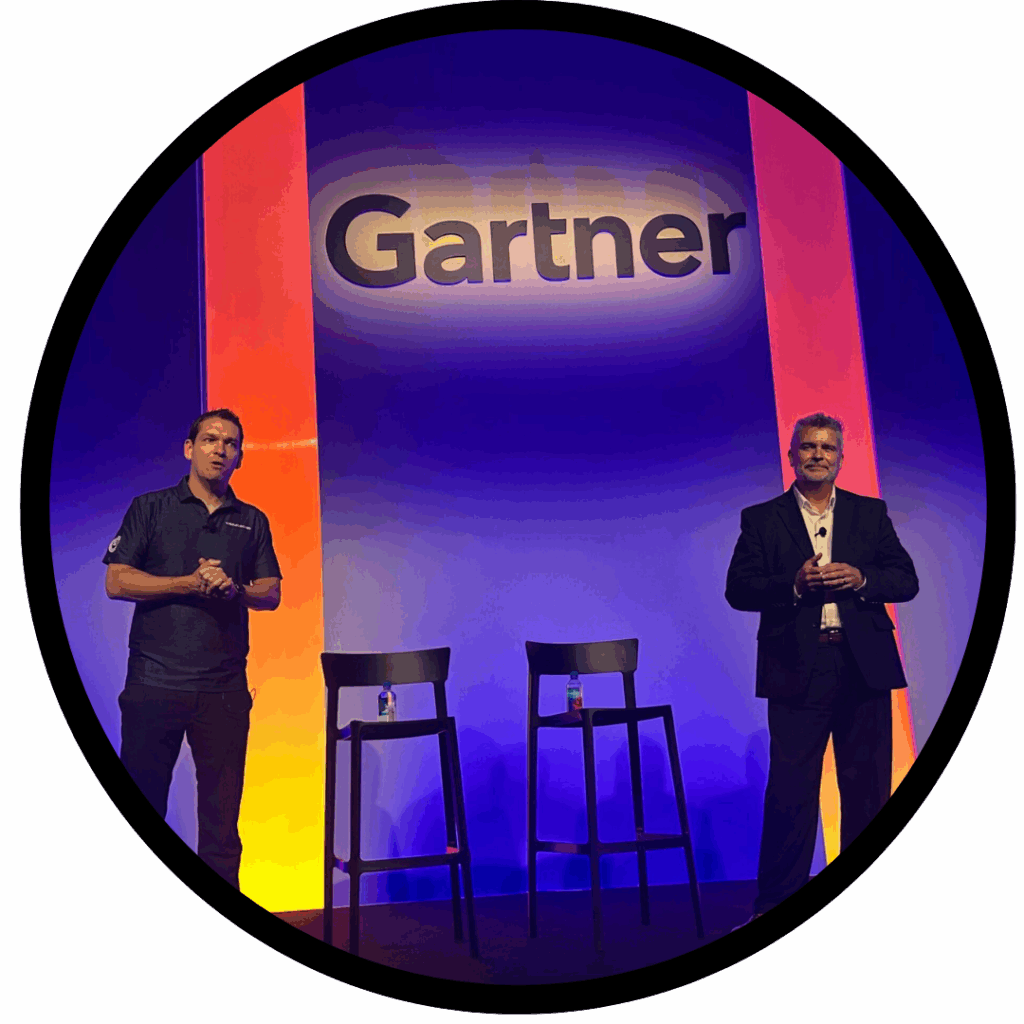
Danny Jenkins, CEO and Co-Founder of ThreatLocker, urged technology leaders to rethink how they measure progress in cybersecurity. Stating that most cyberattacks aren’t complex, they’re preventable.
Jenkins went on to highlighted recurring mistakes that continue to expose organizations: running untrusted software, leaving ports open, and failing to patch systems. “Most cyberattacks aren’t sophisticated,” Jenkins said. “They’re the same basic mistakes we’ve seen for years.”
In a conversation with Gregory August, CIO of EWTN Global Communications Network, Jenkins explored how a practical Zero Trust model works in the real world. August explained how his team reduced complexity and improved control by adopting a “default-deny” mindset, limiting privileges, ringfencing critical applications, and building a culture focused on prevention.
“People do what’s easy. If we make it easy to close the gaps, we make it hard for attackers to succeed.”
Danny Jenkins
The discussion emphasized that effective security depends more on discipline than on tools. Zero Trust, Jenkins said, is a posture that demands steady communication, incremental progress, and the resolve to overcome cultural resistance.
Cybersecurity leadership starts with clarity and consistency. The path forward is about helping teams master the basics and make strong security habits routine.
Building C-Suite Endurance and Trust in the Age of Volatility
Jennifer Carter, Senior Director Analyst at Gartner, delivered a call to action for CIOs to capitalize on the spotlight.
Drawing from Gartner’s 2025 C-Suite Dynamics Survey, Carter revealed that CIOs are now the second-most trusted and most confident executives after CEOs, credited for transparency, business value articulation, and steady leadership in volatile times.

“Be the flashlight in the fog for your C-suite — help them see through the trends and focus on the tech that really matters.”
Jennifer Carter
Carter unveiled The C-Suite Training Plan, a leadership fitness model built on four disciplines: Volatility, Trust, Flexibility, and Savviness
She urged CIOs to embrace this training mindset with actions that include taking calculated risks, sharing metacognitive processes to bridge perception gaps, experimenting toward shared outcomes, and cutting through AI and cybersecurity hype with reality checks.
Carter emphasized that volatility is the new norm, and CIOs trusted for their resilience and clarity are best positioned to guide their organizations toward endurance and growth. “Endurance,” she concluded, quoting triathlete Scott Molina, “is not just the ability to bear a hard thing, but to turn it into glory.”
Monday Night Keynote: The Science of Happiness
Harvard professor and bestselling author Arthur Brooks headlined the Monday evening keynote at Gartner IT Symposium/Xpo with a powerful message on the science of happiness.
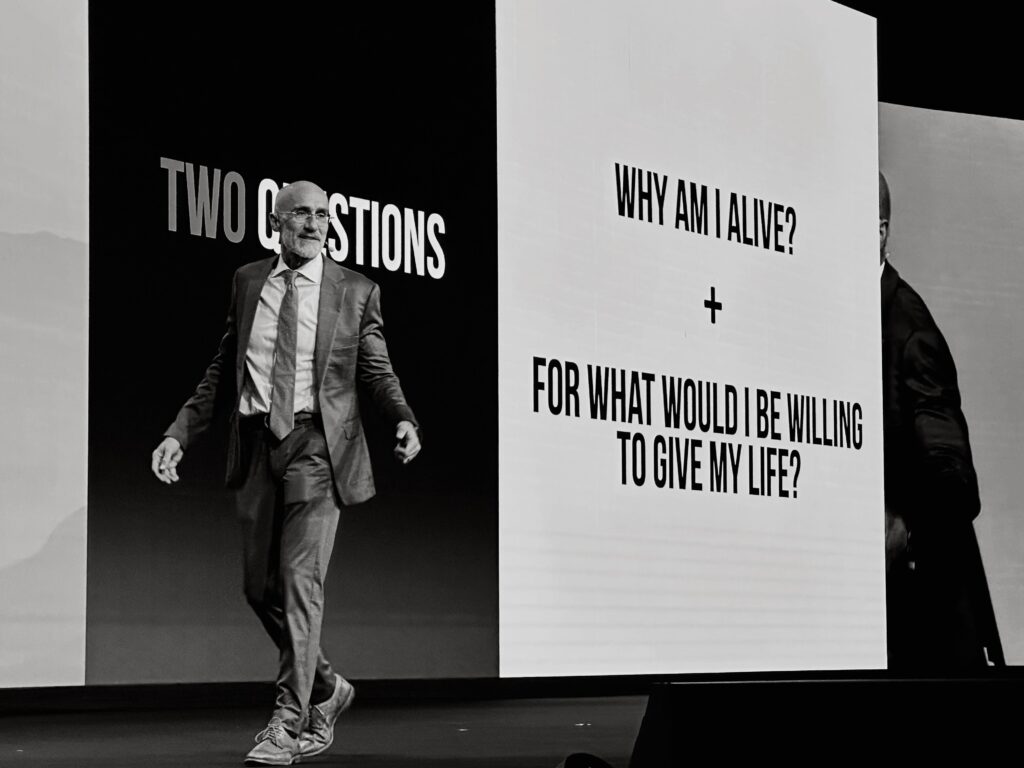
Brooks reframed happiness as a skill and discipline, one that leaders can intentionally build and teach. He described happiness as a mix of enjoyment, satisfaction, and meaning, and urged CIOs to become “happiness teachers” within their organizations.
Through neuroscience and storytelling, Brooks showed how pleasure becomes true enjoyment when shared with others, how lasting satisfaction comes from managing desires rather than accumulating more, and how meaning emerges from purpose, coherence, and service.
He closed by challenging attendees to apply four lifelong habits of faith or philosophy, friendship, family, and meaningful work, reminding them that “great leaders are happiness teachers.”