
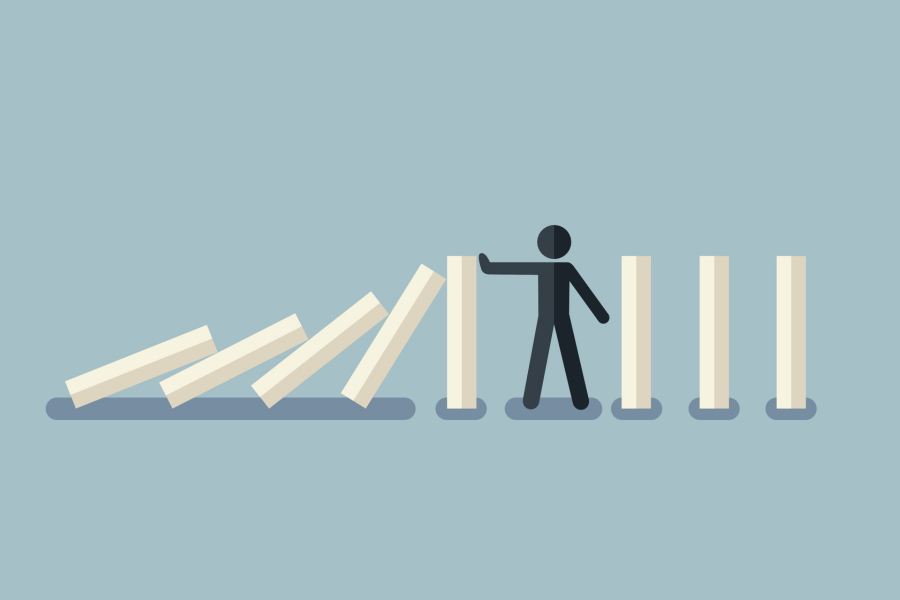
Cybersecurity still shows up in most boardrooms as a prevention problem. The language hasn’t changed much. Stop the breach. Block the attack. Close the gap. The underlying assumption is that if the perimeter holds, the business holds.
That assumption no longer matches reality. Breaches are now part of operating a modern company. The question is no longer whether an incident will occur. It is what happens to the business when it does.
This is where most organizations are exposed, not in detection or tooling, but in what happens next.
I’ve seen companies with strong security programs lose control of the situation within hours of an incident, not because they lacked alerts or controls, but because the business was not prepared to operate through disruption. Decisions slowed, ownership blurred, and recovery became improvisation.
At that point, cybersecurity stops being a technical issue and becomes a business continuity issue.
Operating Gaps
Most companies are not designed for that. Security teams are measured on prevention, uptime is owned somewhere else, and crisis response sits in a binder. Leadership assumes these pieces connect. They don’t, not under pressure.
When a real incident unfolds, the gaps become visible.
- Who decides what gets shut down?
- Who accepts the risk of staying online?
- Who has the authority to override normal controls?
Those questions often do not have clear answers in the moment.
So the organization hesitates. Time is lost, the impact expands, and what began as a contained event becomes a broader operational problem.

Shift To Resilience
Cybersecurity is moving from a discipline focused on stopping events to one focused on surviving them.
That shift is uncomfortable because it forces a different conversation at the executive level. Prevention feels controllable. It fits into budgets, tools, and reports. Resilience is different. It requires leaders to accept that failure will occur and to design for it.
But the companies that move first are not waiting for that conversation to become easy.
They are asking more direct questions:
- If a core system is unavailable for a day, what happens to revenue?
- If customer data is exposed, how quickly can trust be rebuilt?
- If access is lost across a business unit, how does work continue?
These are not security questions. They are operating questions, and they tend to reveal a different set of issues:
- Dependencies that were never fully understood
- Manual workarounds that do not scale
- Decision rights that were never clarified
- Plans that exist on paper but have never been tested under real conditions.
None of this is visible in a standard security report. It becomes visible only when the focus shifts from stopping incidents to absorbing them.
That is where resilience begins.
It shows up in how quickly a company can make decisions under pressure, in how clearly authority is defined when normal rules break down, and in how well the business can continue to function while systems are degraded.
Most organizations discover these things for the first time during an incident. A smaller group chooses to confront them before.
They run the scenario far enough to see where it breaks. They force decisions before the pressure arrives. They align leadership on what matters most when tradeoffs become real.
That work is structural. It is about how the company operates when conditions are not normal.
And it is increasingly what separates contained incidents from enterprise-level disruption.
Board Perspective
Boards are starting to sense this gap. The reporting they receive is detailed. It speaks to controls, coverage, and compliance.
But it rarely answers the question they are beginning to ask more directly: If something gets through, what happens to the business?
That question reframes cybersecurity entirely. It moves the conversation out of the security function and into the core of how the company is run.
This is where the next phase is heading, not away from defense, but beyond it.
The organizations that adapt will still invest in prevention. They will still strengthen controls. But they will not mistake those efforts for preparedness.
They will design for continuity under stress. They will clarify decisions before they are needed. They will treat disruption as a condition to manage, not an exception to avoid.
Because at scale, resilience is not a feature of the security program. It is a property of the business.