

The CIO Professional Network, the private CIO, CISO, and CTO community for The National CIO Review, gathered for a a Roundtable discussion led by Rafael Pimentel Pinto on building a sustainable culture of innovation. Drawing on his experience in the media industry, Rafael shared a story about an innovation initiative that initially produced strong results but later fell apart when the organization attempted to turn it into an internal business unit without preserving the conditions that made it successful.
Attendees discussed how innovation efforts lose momentum when they are treated as projects, departments, or side activities instead of ongoing cultural practices.
Rafael described how the original program succeeded because it used an open innovation methodology and executive support. Once the model was internalized, however, mentors became distracted by normal KPIs, projects lost priority, and the organization returned to “business as usual.”
Attendees discussed business value, stakeholder engagement, psychological safety, governance, and the importance of repeatable systems. Through personal examples the conversation examined why innovation requires leadership discipline and a clear connection to business outcomes.
Why It Matters: Leaders are often expected to drive innovation, but this Roundtable showed that innovation has to live outside IT as well. It must be supported by structure and a culture where employees feel safe testing ideas and learning from failure. The takeaway was that innovation succeeds when it becomes part of how the organization operates every day instead of like a temporary initiative.

- Start With a Clear Problem: Innovation becomes more effective when a specific challenge is defined. The group emphasized that teams need clarity on what they are trying to solve before they begin generating ideas. Without that focus, efforts drift and make it difficult to measure progress or build momentum. By structuring around a well-defined problem, teams gain direction and ensure that innovation stays relevant to the business.
- Make Value Visible From the Beginning: One member reinforced that innovation must be grounded in clear business value instead of the excitement of a new idea or technology. He shared that when vendors or internal teams propose solutions, his first response is to ask them to demonstrate how it will meaningfully impact the business. This mindset acknowledges that without a clear connection to outcomes, even well-designed innovations struggle to gain traction. Teams are far more likely to support new initiatives when they can see how the work will influence outcomes that matter. Even early-stage ideas benefit from a clear narrative around why they matter to help avoid the perception that innovation is disconnected from real priorities.
- Bring in the People Who Actually Do the Work: Several participants mentioned that the most practical and effective ideas often come from individuals working closest to the day-to-day operations. These employees understand the friction points that are not always visible at higher levels and can offer perspectives on what will or will not work in practice. This was illustrated with an anecdote from an attendee about a phone system replacement, where instead of relying solely on leadership input, he intentionally involved the secretaries who used the system every day. Their feedback turned out to be vital as they were the primary users, but they also identified issues and pushed back on solutions that did not meet their needs. Involving users early in the process builds ownership, making it far more likely that any resulting changes will be adopted successfully.
- Avoid Turning Innovation Into a Separate Function: The group discussed how quickly innovation can lose momentum when it is assigned to a specific team or department. Once that happens, others may disengage, assuming it is no longer their role to contribute ideas or challenge existing processes. Another participant shared how their organization approaches cybersecurity as part of an enterprise risk management effort. By putting security at the organizational level, teams are given clear guardrails and expectations that allow them to move faster without constantly seeking approval. This same principle applies to innovation as shared support and clear frameworks lead employees across the business to engage and experiment.
- Create an Environment Where It Is Safe to Try and Miss: Another recurring theme was the importance of psychological safety in enabling innovation. Employees need to feel comfortable sharing ideas and testing approaches that may not succeed, without worrying about negative consequences. When leaders openly treat setbacks as learning opportunities, it encourages more participation and leads to better long-term outcomes.
- Protect Time So Innovation Can Actually Happen: While organizations often focus on allocating budget, time tends to be the more limited resource. Employees are already managing competing priorities, and without deliberate effort to carve out space for innovation, it is quickly deprioritized. The group emphasized that protecting time is not just about scheduling, but about signaling that this work is important enough to step away from routine tasks.
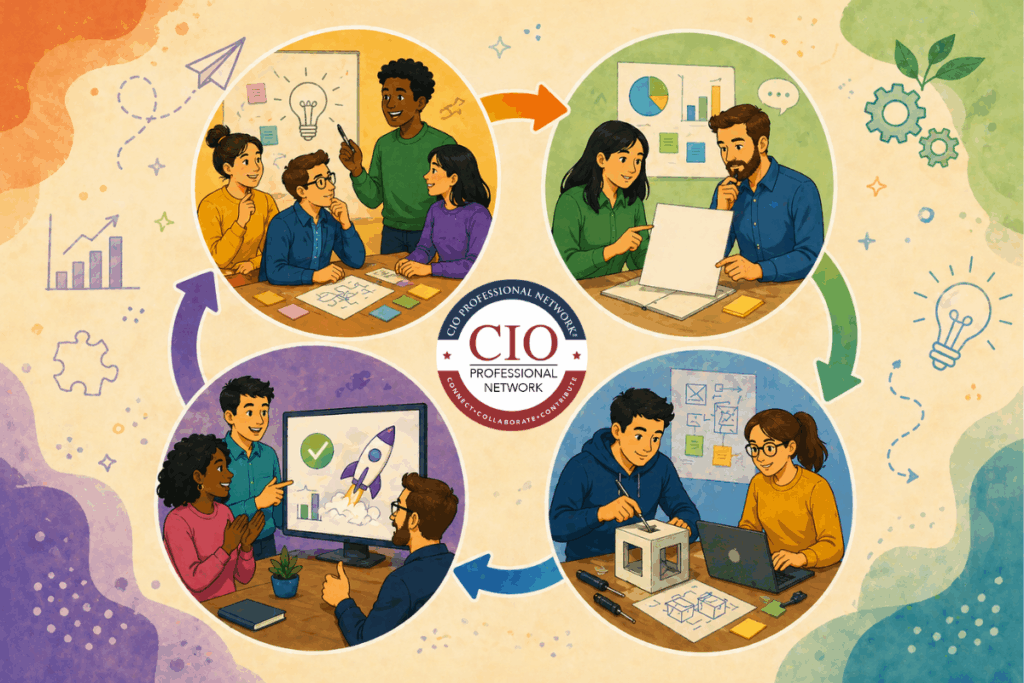
- Keep the Cycle Going Until It Becomes the Norm: The session closed on the idea that innovation is an ongoing development cycle that must be continuously repeated. With this, the real challenge organizations face is maintaining the discipline to keep testing, learning, and evolving. Teams that succeed are those that treat innovation as part of their operating rhythm, where experimentation and iteration are expected and not exceptional. This means regularly revisiting assumptions and adapting even when current systems appear to be working. Over time, this repetition forces innovation to become naturally embedded in how teams think and operate.
Go Deeper -> Members Only: Encouraging Innovation Inside the Enterprise (VIDEO) – CION Roundtable