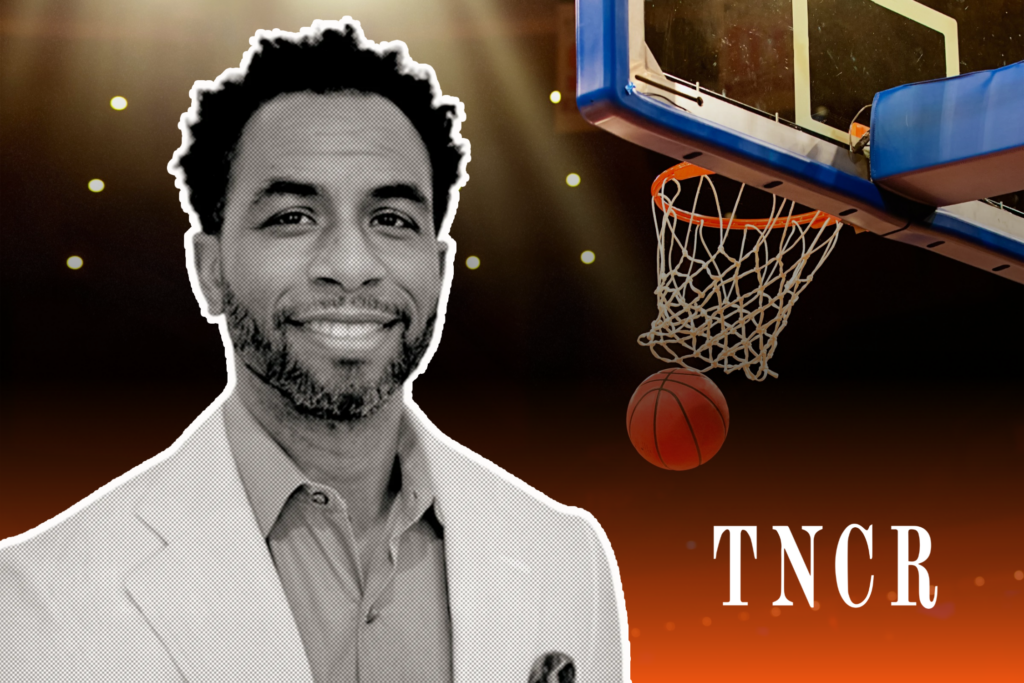
Dr. Charles Harris Jr. knew early on that technology would play a central role in his career. Video games and home computers first captured his attention, and a programming class in high school showed him that his curiosity could become a profession.
His interest in leadership developed later. While supporting shipping technology at UPS, Harris saw how often technically skilled teams struggled to connect their work to the needs of the business. He also learned that a calm, trusted technology partner could change the experience of an employee facing a system failure at the worst possible time.
Those lessons have stayed with him for more than two decades in technology.
Most recently, Harris led technology for the Tampa Bay Buccaneers, where his team consolidated workplace tools, expanded the organization’s cloud footprint, strengthened business continuity and cybersecurity, and introduced technology designed to make the stadium experience easier for fans.
Now, he serves as Vice President of Technology for Spurs Sports & Entertainment. As he begins this next chapter in San Antonio, Harris is focused on learning the organization, building relationships, and creating a technology vision to support the people responsible for carrying it forward.
His approach begins with business acumen and listening. Harris believes technology leaders earn trust by understanding each department and giving team members meaningful ownership of the plan.
Walk us through your career path. How did you decide to pursue a career in technology, and how did you get to where you are now?
I knew fairly early that I wanted to work in technology. Like many people who grew up in the 80s and 90s, I watched video games and computers become more accessible. Those early experiences made me curious, but my first programming class in high school was when I knew I had to pursue something in the field.
At first, I was focused almost entirely on the technical work because I wanted to get my hands on whatever I could and learn through experience. The leadership side came later, when I noticed the gap between people with strong technical skills and the business teams they supported.
Technology was becoming part of everyone’s work, yet the people who understood it didn’t always know how to guide others through that change.
I saw that firsthand at UPS, where I worked in technical support. Our team installed and supported shipping systems for businesses across Indiana. We provided the devices and software, connected those tools to company databases, trained employees, and responded when something went wrong.
If a customer was facing a deadline and the system stopped working, our job involved more than solving the technical problem. We had to bring calm to a difficult moment and help the customer feel supported.
When a supervisory position opened, I decided to pursue it.
I had spent enough time evaluating the leaders above me and thinking about what I might do differently, so it became an opportunity to test those ideas myself. UPS took leadership development seriously. New supervisors received training in conflict resolution and handling difficult situations, with direct feedback throughout the process.
I was suddenly supervising people I had worked alongside, including older or more tenured colleagues. It taught me to address difficult issues directly and to keep evaluating my own performance.
I didn’t need to imitate someone else’s personality to lead well. I needed to set clear expectations, build relationships, and create an environment where the team understood what we were working toward together.
Over time, I moved farther away from being the person doing the most technical work and became more focused on setting a vision.
I found that I enjoyed creating the conditions for talented people to do their best work and helping the organization understand what technology could make possible.
You spent the past few years leading technology for the Tampa Bay Buccaneers and are now joining the San Antonio Spurs. What are you most proud of from your time in Tampa Bay, and what are you most excited to take on in San Antonio?
I am most proud of the team we built in Tampa. It included people who had served the organization for years, along with new hires who brought experience from outside sports.
Bringing those perspectives together gave us a strong group that could modernize while respecting the knowledge already in place.
We expanded our use of Microsoft tools, moved workloads into Azure, and retired several servers as more of our environment moved to cloud services. We also migrated file storage to Teams and OneDrive, moved phone service from RingCentral to Teams, and reduced the number of separate tools employees had to navigate.
That consolidation made collaboration more consistent and gave us a better enterprise view of cost and integration.
We also strengthened business continuity for important assets such as video storage by combining on-premises and cloud capabilities. Previously, the organization depended heavily on systems and content inside the building. The work we completed gave employees a much better ability to continue operating during a major disruption.
Cybersecurity was another major focus, including progress toward zero trust and more consistent identity management.
“Technology needs to be steered by the desires and the needs of the organization.“
Of course, our responsibilities as a major sports organization extended into the stadium and the fan experience. We improved network coverage and performance, supported the broadcast technology behind the in-venue presentation, and introduced facial recognition for ticket entry.
Fans who enrolled could use an express lane and look at a camera to have their tickets identified without the usual stop at the gate. It was an early step toward a digital identity that could support other parts of the experience over time.
The Buccaneers are approaching an important period of stadium renewal, and I’m proud that the team is prepared for the work ahead. We accomplished a great deal with a small group. I look forward to seeing what they do next.
The opportunity ahead of me in San Antonio carries a similar sense of potential.
Spurs Sports & Entertainment is an impressive organization with a clear interest in continued innovation. The team is doing exciting things on the court, and I want to help bring that same energy to the work happening throughout the business.
I’m looking forward to becoming part of the culture and helping the organization pursue what comes next.
How do you decide which technology investments are worth pursuing and which are not right for the organization?
I start with the effect an investment will have on the organization and what the business needs at that moment. An initiative may improve security, make work more efficient, support revenue, or lower costs. Once we understand the expected return, we can explain why the investment belongs on the roadmap.
There will always be technology that is interesting or slightly better than what an organization already has. That alone does not make it worth pursuing.
If the goal is fan engagement, how will it make the game more enjoyable? If it supports an internal department, how will it improve that team’s work? If it addresses risk, how will it better protect the environment?
“I do not want to introduce a tool simply because it is new. I want to understand how it will improve the business.”
The CIO seat can offer one of the best views of the entire organization when the role is performed well.
Good decisions require an understanding of how every department operates, where its pain points are, and how its workflows fit together. That knowledge comes through relationships. Department leaders need to know that their goals are part of my agenda and that I am bringing technology forward to help them succeed.
Trust builds as those projects deliver results. Business leaders become more willing to explain what they need, which allows the technology team to respond with useful options.
That’s where business and technology come together.
A recommendation has value because people understand what it will do for them and why it deserves their investment.
Can you share a time when you had to pivot on an IT initiative and what that experience taught you?
We had a major server project that had been in development for about a year and had selected a well-known vendor and worked through the contract and implementation plan. The existing server needed to be replaced, and the new equipment had reached our loading dock when circumstances on the vendor’s side caused the deal to fall through.
At that point, the technical requirement had not changed. We still had an aging server and an urgent business need, so I had to find another route.
The relationships we had built with trusted technology partners became especially important. I could explain the situation openly and ask them to work with the same urgency we were facing.
We ultimately moved to NetApp and adopted an infrastructure-as-a-service model that fit the organization well. It gave us flexibility as our storage requirements changed without forcing us to buy large amounts of hardware in advance.
The transition required considerable work, but the result gave us a setup that could adapt to the business.
That experience reinforced the importance of flexibility. A leader can spend months preparing a project and still encounter something outside the team’s control. At that point, the work is to remain focused on the problem, use the relationships available to you, and keep moving until the organization has a sound solution.
What has your current role taught you about yourself as a leader?
My role has helped me understand what gives me energy in this work.
I enjoy developing a vision and seeing it through. I want to be able to look back after one year, three years or five years and see how the team and the technology have developed.
There is an entrepreneurial quality to building a vision and seeing other people choose to invest in it.
However, that still requires regular self-assessment. I ask myself why I am doing the work and how the next experience should change my approach.
“I am not the smartest guy in the room, so let’s all be smart together.”
I never want to assume that reaching a certain position means I am finished developing.
I try to create the same habit within my teams, although it cannot be applied identically to every person.
Someone who wants to lead needs chances to guide projects and think through decisions. A person who wants to remain deeply technical may need room to improve a process, sharpen a skill or produce better work within that specialty.
My responsibility is to understand what motivates each person and connect that development to where the organization is going.
When team members can help determine how their part of the vision will be achieved, they become more invested in it. They begin to view their work as something they own and bring forward ideas of their own. That is the kind of team I want to build.
What advice would you give someone aspiring to lead technology for a major sports and entertainment organization?
Develop your business acumen. Technical knowledge matters, but a senior technology leader must understand how the organization operates, how it generates revenue, and what its leaders are trying to accomplish.
If you know how to build a strong team, the team will bring the depth required across the technical environment. Your role is to guide that expertise toward what is best for the organization.
That may mean deciding that an exciting tool is not right for the business yet. For example, an organization may be interested in artificial intelligence, but lack the technical readiness to use it well. Technology leaders have to recognize where the organization is today and introduce capabilities at a level people can absorb so they can properly lead development over time.
Every organization has its own history and hidden complications. When you enter a new role, you have to listen before you prescribe.
I may arrive with an initial vision, but it only becomes useful after I’ve heard from the people who know the environment. Ask questions and listen without immediately trying to solve everything.
You cannot build a credible path forward until you understand the starting point.
How do you decompress from the challenges of being a technology leader? What do you like to do for fun?
I’m a fairly simple person. I enjoy movies, sports, and spending time with my family.
My wife and I spend a lot of time together, whether it’s watching a movie, going out to eat, or finding somewhere nearby to visit. I also have grandchildren, whom I enjoy spending time with.
I played a lot of basketball when I was younger, although I do less of that now. I still enjoy video games, and I like to travel when I have the opportunity. Most of the time, I don’t need an elaborate plan to recharge. If I can slow things down and relax by a pool or at the beach, I’m in a good place.
I also enjoy an occasional cigar and bourbon. That can make for a very relaxing Friday or Saturday night, even if I’m only sitting on the back porch.
Are there any books that you recommend, that you give to others, or that have shaped you as a leader?
I can’t point to one person or one book. The leadership training I received at UPS had the greatest early influence because it arrived when I was first learning what it meant to supervise other people.
It made me take leadership seriously and showed me that the skills involved can be taught and practiced.
I have continued to take leadership courses and read books about CIOs and the situations other leaders have faced. However, I don’t accept every idea as an instruction to follow.
Gathering different perspectives helps me decide what I believe about the role and how I want to lead.
Some of my strongest lessons have also come from observing leadership I did not want to repeat. When you see how poor leadership affects employees, it forces you to consider the experience you want to create instead. Work already asks a great deal of people.
A leader can hold a team accountable without making the environment harder than it needs to be.
I want people to finish a demanding day feeling that we did good work together. When employees know I will look after them and respect their lives outside the organization, they are often willing to give their best when the team truly needs it.