
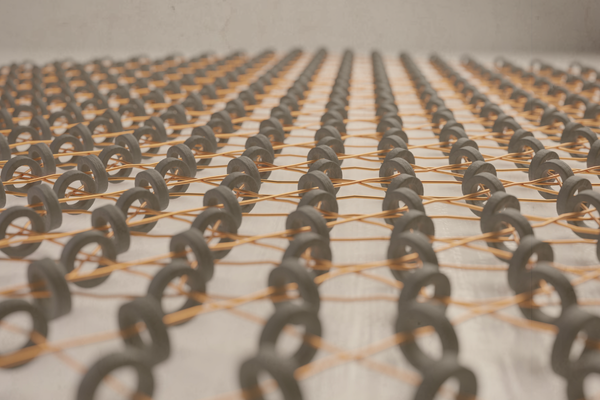
In October 1949, An Wang, a Chinese-American computer engineer and inventor, filed a patent for what he called “pulse transfer controlling devices.” While the name might sound modest, the magnetic core memory concept it embodied would soon become a bedrock of modern computing. This key innovation helped propel computers into faster, more efficient tools ready for the digital age.
Wang’s design solved a pressing challenge of how to store and retrieve data quickly without relying on moving mechanical parts.
His use of magnetic ferrite cores provided just that, offering reliable, non-volatile memory that could be accessed electronically. It was a pivotal moment in computing history, and today, we celebrate the 76th anniversary of this transformative breakthrough.
A Brilliant Idea: The Birth of Core Memory
In the late 1940s, computers were still in their infancy. Data storage was clunky and expensive, often relying on vacuum tubes, delay lines, or spinning magnetic drums. An Wang’s “pulse transfer controlling devices” introduced a better way using tiny magnetic rings, or “cores,” to store individual bits of data. These ferrite cores could be magnetized in one direction or another to represent a binary 0 or 1.
Even more remarkably, Wang’s technique included a method for reading the stored data without destroying it, a key advancement that distinguished his patent.
Though he initially developed this innovation while working at Harvard’s Computation Laboratory, Wang wisely secured the patent for himself. IBM would later license the technology from him, using it in its landmark computers of the 1950s and 1960s.

From Core Memory to Wang Laboratories
Just two years after filing his patent, An Wang founded Wang Laboratories in 1951. Starting modestly, the company would grow into a computing powerhouse by the 1970s and 1980s, becoming a symbol of technological innovation and entrepreneurial success.
Wang’s contributions laid the foundation for the transition from vacuum tubes to solid-state memory, influencing mainframes and paving the way for personal computing.
Though magnetic core memory was eventually supplanted by semiconductor memory in the 1970s, its impact on the evolution of digital technology enabled more reliable, faster, and scalable computing.
The Wrap
An Wang’s patent filing was a leap into the future of computing. His vision and ingenuity helped unlock the potential of electronic memory, bringing us closer to the powerful, compact devices we use today.
As we mark 76 years since this quiet revolution began, we remember An Wang as a pioneer whose “core” idea changed the world.