
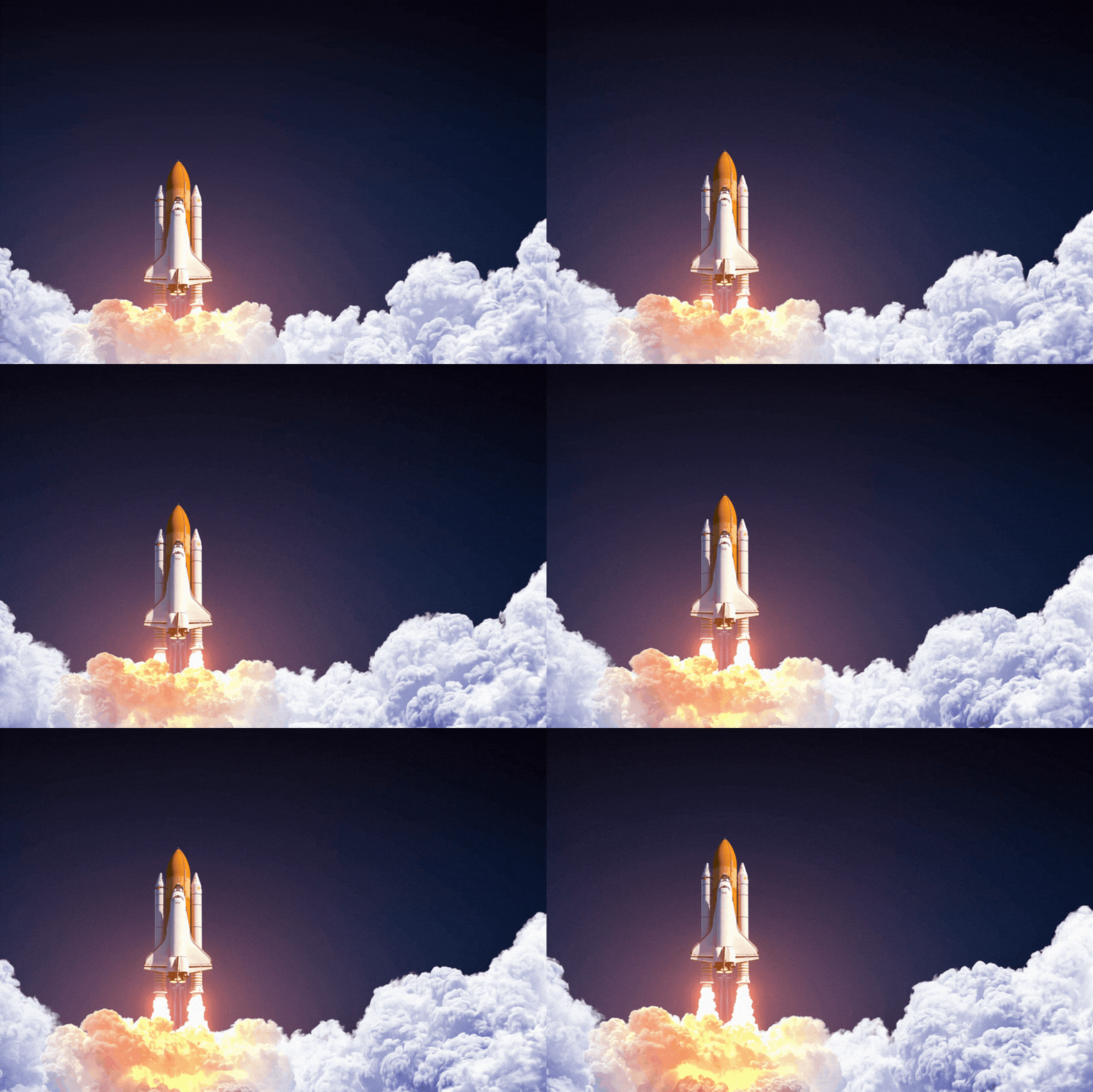
SpaceX has completed its acquisition of xAI, bringing Elon Musk’s artificial intelligence company inside his aerospace and satellite business. The combined organization now includes launch vehicles, satellite production, Starlink connectivity, AI model development, and ownership of the social platform X.
Public records show the transaction closed on February 2, with SpaceX listed as the managing entity.
The motivation centers on the physical limits facing AI development on Earth. Musk argues that data centers now demand levels of electricity and cooling that strain power grids and provoke local resistance.
By moving compute-intensive systems into orbit and relying on solar energy, the company aims to unlock far larger compute capacity while reducing dependence on terrestrial infrastructure.
This transaction also arrives as SpaceX prepares for a potential public listing.
Why It Matters: The acquisition treats AI growth as a physical problem tied to power and infrastructure. Compute can only expand when enough energy is available and when hardware can be built and deployed, which makes control of launch systems, satellites, and networks central to continued progress.

- Power Availability Is Becoming a Binding Limit for AI: Current AI systems rely on large data centers that consume enormous amounts of electricity and cooling. Reporting on xAI’s terrestrial facilities shows how this demand translates into higher operating costs, emissions concerns, and growing resistance from nearby communities. Orbital data centers remove dependence on local grids and sidestep many of the social and regulatory pressures tied to concentrating energy-intensive infrastructure on Earth.
- Starship Enables a New Class of Space Infrastructure: The plan depends heavily on Starship’s ability to move unprecedented amounts of mass into orbit. With payload targets approaching 200 tons per launch and an intended high flight cadence, Starship allows SpaceX to think about space hardware in industrial quantities. This capability changes what is technically possible by making the deployment of very large numbers of compute-focused satellites feasible for the first time.
- Cost Claims Hinge on Solar Power and Minimal Operations: Musk argues that continuous exposure to sunlight in orbit changes the economics of compute generation. Satellites powered by solar energy avoid fuel costs and reduce ongoing operational demands tied to cooling and maintenance. Under this model, deploying millions of tons of hardware could add hundreds of gigawatts of compute capacity each year, creating a cost structure that may undercut Earth-based alternatives within a few years.
- The Merger Consolidates Control Across the AI Stack: xAI contributes model development and the Grok system, while SpaceX supplies launch vehicles and satellite platforms. Starlink provides global connectivity, and X adds distribution and a live data stream. Bringing these pieces under one owner reduces reliance on external providers as the combined company moves closer to a public listing reportedly valued above one trillion dollars.
- Orbital Data Centers Tie Directly to Off-World Expansion: Near-term orbital computing is described as a stepping stone to work beyond Earth orbit. Starship’s ability to carry heavy cargo, along with refueling in space and future manufacturing on the Moon, makes it possible to place AI systems farther from Earth. These efforts connect today’s AI infrastructure to plans for long-term activity on the Moon and Mars using abundant solar energy.
Go Deeper -> xAI joins SpaceX to Accelerate Humanity’s Future – SpaceX
Elon Musk’s SpaceX acquiring AI startup xAI ahead of potential IPO – CNBC
Elon Musk’s SpaceX acquires xAI, merging his two most ambitious companies – CNN Business