

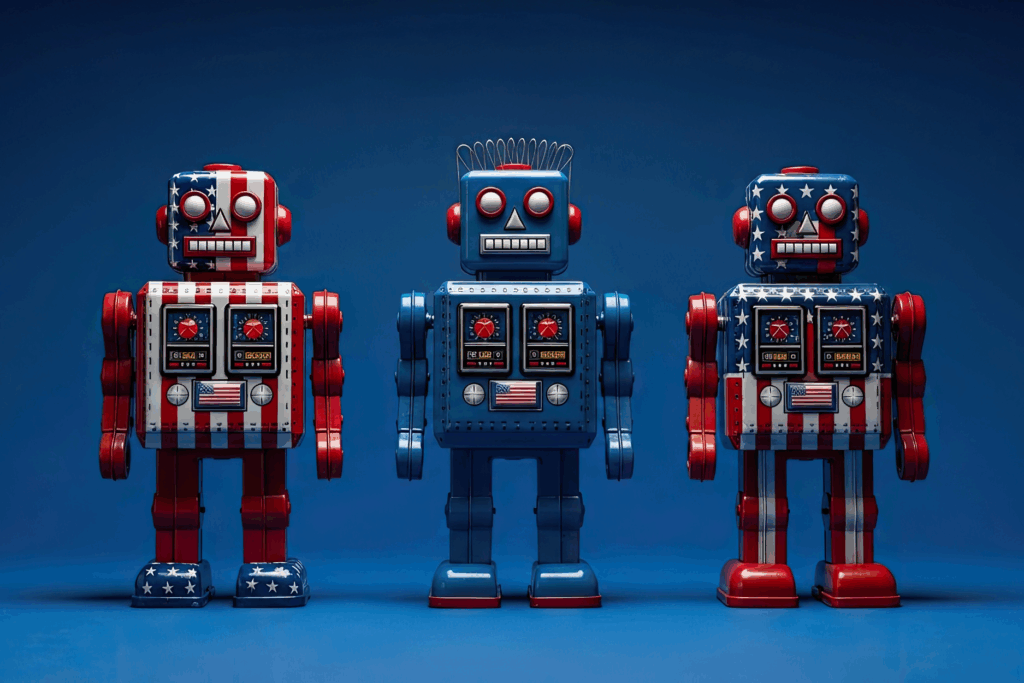
The Pentagon added secure versions of OpenAI’s ChatGPT and Starshield AI’s Grok to GenAI.mil, expanding the commercial AI tools available across the Defense Department.
ChatGPT Mil and Grok for Government join Google’s Gemini on the internal platform. More than 1.7 million unique users have accessed GenAI.mil from a workforce of roughly 3 million military members, civilian employees and contractors.
The additions give personnel more choice in how they use generative AI for government work, with each model bringing different capabilities to the platform.
Why It Matters: More than half of the Defense Department workforce already uses GenAI.mil, putting the Pentagon well past the AI pilot stage. Supporting several models means figuring out where each one fits, who gets access and what controls need to stay consistent across them. Those decisions become harder to change once AI starts working its way into everyday operations.

- ChatGPT Moves Into Everyday Work: ChatGPT Mil brings the familiar ChatGPT experience into routine government work, from planning and policy to administrative tasks. Personnel can build repeatable workflows for work such as travel forms or contracting opportunities, while keeping conversations and files together over longer projects. The platform also includes Offline Search, which provides cited information that can be refreshed over time. GPT-5.4 Terra is available now, with GPT-5.6 Terra expected to follow.
- Grok Takes a Different Approach: Grok for Government gives personnel different reasoning modes depending on the task, along with workspaces that can carry across longer projects. Its reusable “playbooks” let teams save established processes and institutional knowledge for future work. The Pentagon expects the tool to support areas such as acquisition research and supply-chain management.
- Sensitive Data Gets Its Own Guardrails: Each model has received Impact Level 5 authorization, clearing it to handle sensitive Controlled Unclassified Information. That allows personnel to use commercial AI for government work without sending sensitive data through consumer versions of the tools. Any model added to GenAI.mil must meet the same security requirements.
- Avoiding Vendor Lock-In Is Intentional: Defense officials built GenAI.mil to keep the Pentagon from relying on a single AI provider. Having several models available gives the department more freedom to choose the right tool for the work and change providers when needed. Deals with AWS, Microsoft, Nvidia and Reflection AI extend that approach into other parts of its AI infrastructure.
- Claude Remains the Notable Absence: Anthropic’s Claude was expected to join GenAI.mil until negotiations with the Pentagon broke down over restrictions on mass domestic surveillance and lethal autonomous weapons. The department later labeled Anthropic a supply-chain risk, though a federal judge recently ruled against that designation. OpenAI reached its own agreement with restrictions on certain military uses, but it remains unclear whether those terms apply specifically to ChatGPT Mil. The dispute shows how contract terms and usage policies can determine which AI providers an organization ultimately works with.
Go Deeper -> The Pentagon now has its own version of ChatGPT and Grok – TechCrunch
The Pentagon is deploying Grok and ChatGPT for its 1.7 million active military users – Quartz
Grok and ChatGPT join Gemini in Pentagon’s enterprise genAI portal – DefenseScoop