

Over the past year as I began a new role, I found myself having the same conversation with executives, board members, technology peers, and members of my own team.
The conversation usually starts with artificial intelligence.
It quickly turns into a discussion about people.
Will AI reduce technology headcount? Will technology organizations become smaller? What happens to traditional IT roles? Should organizations stop hiring?
Reasonable questions, though perhaps starting in the wrong place.
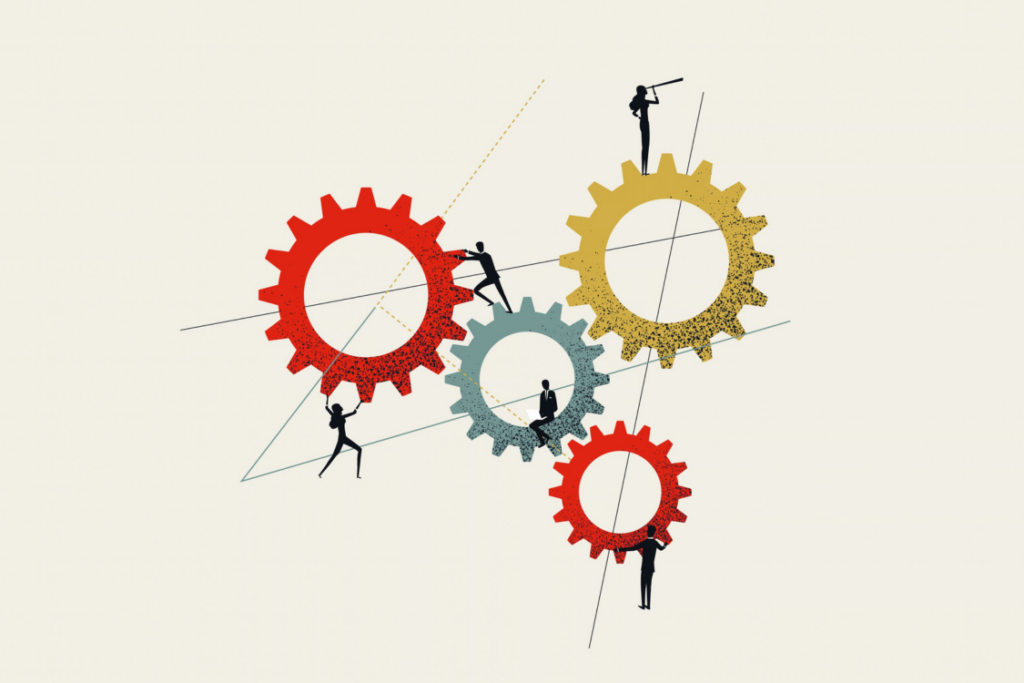
What I am seeing personally is not a story about adding or replacing people. It is a story about fundamentally changing how technology organizations create value.
Today, my team is simultaneously guiding a multi-year ERP transformation, strengthening cybersecurity capabilities, modernizing infrastructure, building our first formal operational technology program, and driving the organization’s AI governance and adoption practices with leadership.
Those responsibilities continue to expand while funding & finding the right talent remains challenging, and expectations keep rising.
Based on what I am seeing, the future technology organization will be smaller, yet it will need to create greater impact.
The organizations that succeed will not have the largest teams. They will be those that learn how to create the most leverage.
The Moment My Thinking Changed
For much of my career, capacity planning followed a familiar formula.
More projects meant more project managers. More systems meant more administrators. More security threats meant more analysts. More work generally meant more people, or pushing people to do more with less.
Over the last year, however, I found myself asking a different question.
“How many people do we need?” turned into “What capabilities do we need?”
That shift changed the way I think about organizational design.
As part of our technology strategy, we are building a three-year roadmap covering ERP transformation, cybersecurity maturity, AI adoption, data governance, infrastructure modernization, and OT capability development.
It quickly became clear that simply adding people would not solve most of our challenges.
In fact, some of the most important obstacles we faced had little to do with staffing. They were governance, decision-making, prioritization, and change-management challenges.
Adding more people to a poorly aligned system rarely produces better outcomes. It usually produces more complexity.
The conversation changed from staffing to leverage.
Technology Teams Are Carrying More Than Technology
Technology organizations are being asked to do far more than manage technology.
In my own role, discussions about our ERP program rarely focus on software. Instead, they focus on questions such as:
- Who owns the data?
- Which processes should be standardized?
- Where should we accept change versus customization?
- How do we create accountability across functions?
- How do we govern decisions consistently?
Those are business questions, not technology questions.
The same pattern exists in cybersecurity. Several years ago, many security discussions were about tools, controls, and compliance. Today, conversations increasingly focus on operational resilience, business risk, employee behavior, third-party exposure, and executive accountability.
Similarly, our AI discussions rarely focus on technology capabilities. They are about governance, value realization, acceptable use, risk tolerance, and organizational readiness.
The CIO organization is becoming less operational and more strategic. That trend will only accelerate.
What Must Remain Internal
One mistake we hear more often is the assumption that AI, outsourcing, or managed services will eventually replace most internal technology expertise.
My experience suggests it won’t. Certain capabilities are becoming more important precisely because technology is becoming more powerful.
Enterprise Architecture
Our ERP transformation reinforced this lesson. As we decide on business processes, integrations, cloud strategy, data models, and future-state operating models, architecture has become one of the most valuable internal capabilities we possess.
Technology can generate options. Partners can provide recommendations. Vendors can provide roadmaps. But someone inside the organization must determine how those pieces fit together and align with business strategy.
That cannot be outsourced.
Cybersecurity Governance
The same is true in security. We continue to improve detection capabilities, automate processes, and leverage increasingly intelligent tools.
Yet the most important security decisions are human. What risks are acceptable? What investments are justified? How do we balance security with operational requirements? Who owns the outcome?
Technology can inform those decisions. Leadership remains accountable for them.
Business Leadership
The most important meetings on my calendar rarely focus on technology itself. They focus on priorities, investments, trade-offs, and outcomes.
As technology becomes easier to consume, aligning it with business objectives becomes more important than ever and other leaders are more open to partnerships than earlier in my career.

How AI Is Already Changing My Team
I do not believe AI is replacing technology professionals. I believe it is amplifying them.
The most significant impact I am seeing is the acceleration of individual productivity.
My team now uses AI to accelerate research, documentation, communication, knowledge retrieval, policy development, presentation creation, and initial analysis.
We are now developing cybersecurity roadmaps, AI governance frameworks, board presentations, strategic planning materials, communication plans, and executive briefings in a fraction of the time these activities would have required not long ago.
The value is that we spend less time creating content and more time evaluating decisions.
Technology leaders should not ask, “How do I eliminate positions?” They should ask, “How do I give talented people more time to solve meaningful problems and create value?“
The Rise of the Multiplied Employee
One concept I continually return to is what I call the multiplied employee.
Historically, many organizations measured capability through team size. I believe the future belongs to organizations that measure capability through impact.
- Consider a cybersecurity analyst supported by AI-assisted threat prioritization.
- Consider an architect using AI to accelerate research and option analysis.
- Consider an engineer automating repetitive operational activities instead of doing them manually.
- Consider a project leader creating executive-ready communications in hours instead of days.
The individual is not becoming less important. The individual is becoming more leveraged.
Organizations that learn to multiply talent rather than simply add headcount will gain a significant competitive advantage.
Capability Over Headcount
Another lesson from our ERP transformation is that capability does not always reside within your employee population.
No technology organization can be an expert in everything. Nor should it be.
Some of our most effective initiatives have combined internal leadership with external partners, managed service providers, system integrators, and AI-enabled tools.
The future CIO organization will increasingly be defined by its ability to orchestrate capabilities rather than accumulate resources.
For many CIOs, the future will involve managing ecosystems rather than departments.
AI Does Not Eliminate Accountability
One narrative I continue hearing is that AI will dramatically reduce technology staffing needs, perhaps in some areas.
But I believe many leaders underestimate a critical reality: the more powerful technology becomes, the more responsibility grows.
Someone still must answer fundamental business questions:
- Is the data trustworthy?
- Is the recommendation appropriate?
- Is the risk acceptable?
- Is the control effective?
- Is the investment creating value?
This has become especially apparent in our AI governance efforts. The discussion is rarely about what AI can do. The discussion is about what AI should do and how we responsibly apply it.
Governance, oversight, security, ethics, and accountability remain human responsibilities. In fact, the more capable AI becomes, the greater those responsibilities.
Bigger Impact, Not Bigger Teams
As I look ahead, the strongest organizations will likely have strong architecture disciplines, mature cybersecurity governance, trusted data foundations, modern ERP platforms, responsible AI governance, strategic partner ecosystems, and employees amplified by technology.
They may not employ significantly more people than they do today. But they will create significantly more business value.
That is the future. Technology organizations built around leverage.
More outcomes. Bigger impact.