As organizational design begins to take shape and tradeoffs become clearer, another reality emerges, one that is less visible but equally consequential.
Trust is not evenly distributed across the organization. It is fragmented.
The business questions IT’s ability to deliver, while IT questions the clarity of direction. Leadership understands that change is needed but lacks confidence in how it will be executed.
This isn’t due to lack of effort. Transformation stalls because the system does not yet have the trust required to scale.
Where Trust Breaks Down
Trust rarely erodes all at once. It declines over time as delivery becomes inconsistent, ownership becomes unclear, and decisions fail to translate into expected outcomes.
Over time, this shows up in predictable ways:
- Business units begin solving problems outside of IT
- Technology decisions become decentralized
- Standards are interpreted rather than followed
- Execution varies significantly across teams
This is often described as shadow IT. It is not a reflection of poor intent, but a signal of misalignment between what the organization needs and how technology is being delivered.
From the outside, this can look like autonomy. In practice, it creates disconnected solutions, inconsistent execution, and increased risk across the environment.
Why Structure Alone is Not Enough
Clarifying ownership and understanding the tradeoffs that shape transformation creates a stronger foundation but structure and clarity, on their own, do not rebuild trust.
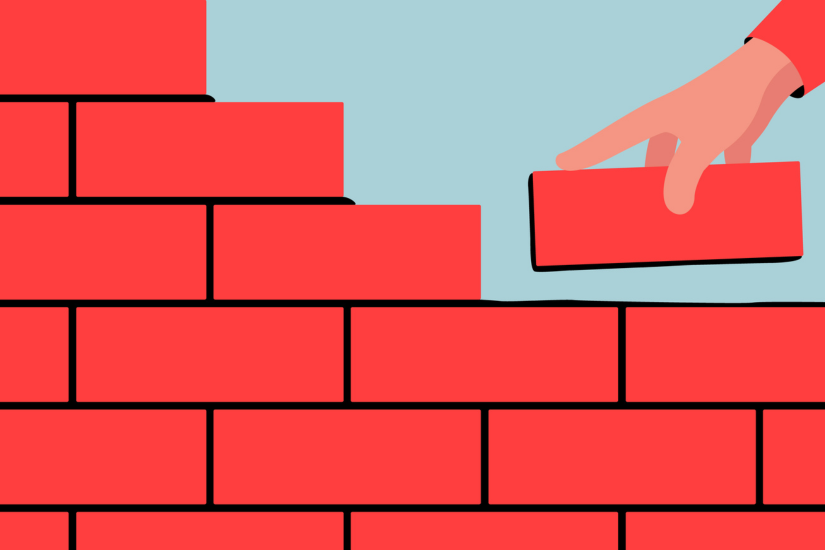
Trust is built through consistent delivery. It is reinforced when decisions lead to predictable outcomes and it grows when the organization sees that change is delivered.
Without that reinforcement, even well-designed structures will not hold.
The Relationship Between Trust and Scale
Scaling transformation requires confidence in how the system delivers.
When trust is low:
- Decisions are second-guessed
- Alignment takes longer
- Adoption slows
- Risk tolerance decreases
Even well-intentioned initiatives struggle to gain traction.
When trust improves:
- Decisions accelerate
- Standards are followed
- Teams align more quickly
- Execution becomes more consistent
Scale, in this context, is about executing consistently as complexity increases.
Rebuilding Trust Through Delivery
Trust is not rebuilt through messaging. It is rebuilt through delivery.
Visibility and alignment were more critical than effort for improving delivery. Work was happening across the organization without a shared view of priorities, ownership, or long-term fit.
To address this, we established clearer governance and intake through the IT Investment Board (ITIB). The goal was to create a shared understanding of what work was happening, why it mattered, and how it aligned to the broader direction.
That shift is creating consistency. Work is becoming visible, decisions are becoming transparent, and expectations are becoming clearer across both IT and the business.
From there, the focus shifts to execution goals:
- From large, complex initiatives to clearly defined, achievable outcomes
- From reactive work to intentional, prioritized execution
- From one-off success to repeatable, consistent delivery
Early in transformation, the objective is to demonstrate that the system can deliver consistently and predictably.
Over time, consistency becomes credibility and credibility becomes trust.
Designing for Trust
Trust is not a byproduct of transformation. It must be designed into how the organization operates.
That requires clarity in how decisions are made and how work is executed:
- Clear decision rights across the enterprise
- Consistent standards that are understood and followed
- Transparent prioritization of work and investment
- Accountability for outcomes, not just activity
This is how the organization creates confidence in its ability to deliver.
Without it, scale introduces risk. With it, scale becomes sustainable.
The Wrap
Rebuilding trust happens through how decisions are made, how work is delivered, and how consistently results are achieved.
Scale comes from creating an environment where the organization trusts that the system will deliver as expected.
That trust is what allows transformation to move from isolated progress to sustained capability.