
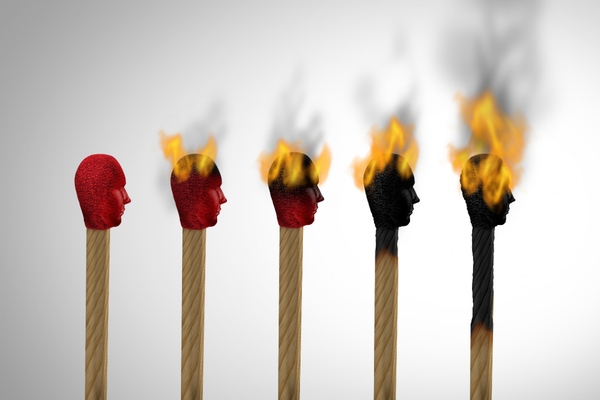
Artificial intelligence is often presented as a way to reduce routine work and give employees more time for higher-value tasks. Recent research from the Harvard Business Review suggests a less tidy reality.
Many workers are finding that AI introduces another layer of supervision and review that can leave them feeling mentally spent by the end of the day.
Researchers have used the term AI “brain fry” to describe this form of mental fatigue.
The phrase refers to the strain that comes from heavy use of AI tools or from having to keep close watch over several systems at once. AI can ease strain when it handles repetitive tasks, yet it can also create heavy mental pressure when workers are expected to monitor outputs, correct mistakes, and keep track of several streams of information at the same time.
Why It Matters: This research suggests that the effect of AI on workers depends heavily on how companies introduce it into daily work. If AI is used in a way that reduces repetitive tasks, employees may feel some relief. If the same tools add supervision duties and a larger flow of information to review, employees may pay for those gains with poorer judgment and higher frustration.

- When AI Drains the Mind: The Harvard Business Review study describes AI brain fry as a condition tied to excessive use of AI tools or heavy oversight of AI systems. Workers said it felt like mental fog, a buzzing sensation, slower thinking, headaches, and trouble focusing on the next decision in front of them. That matters because the research treats this as an acute strain on working memory and decision-making capacity rather than the chronic emotional exhaustion that is usually associated with burnout. In plain terms, workers can feel mentally overloaded during or after intensive AI use, even if they do not describe themselves as emotionally worn down in the traditional workplace sense.
- Why Oversight Wears Workers Down: Research found that workers who had to keep a close watch on AI systems reported more mental effort and more information overload. That result fits the examples where workers described jumping between drafts and decision aids while trying to verify accuracy and maintain control over the final result. AI’s existence in the workflow is not the issue. The extra layer of management that AI can create requires employees to review outputs, catch errors, compare conflicting suggestions, and stay alert for the next failure point. In that setting, the tool saves labor in one place while demanding more attention in another.
- Where Productivity Starts to Slip: Self-reported productivity improved as workers moved up to three AI tools in use at the same time, then declined once they were managing four or more. That finding suggests there is a point where the added assistance no longer helps enough to offset the mental cost of constant switching and review. A worker may gain speed on isolated tasks while losing clarity across the full workday. This helps explain why employees can feel overloaded and less certain of their decisions even while using tools that are supposed to make work easier. The number of systems in play matters because each added tool can create another stream of content to revise and remember.
- How Fatigue Turns Into Mistakes: Workers who experienced AI brain fry also reported higher decision fatigue and more frequent minor and major errors. The study also found a higher intent to quit among those who said they had experienced this kind of fatigue. Those findings raise a workplace issue that shows a stronger impact than typical personal discomfort. Jobs that depend on strong judgment or high-stakes decisions may be affected when employees are mentally overloaded by the systems they are supposed to supervise. A company may believe it is increasing efficiency while also creating conditions that make costly mistakes more likely and make valuable employees more willing to leave.
- When AI Actually Helps: One of the clearest findings across the sources is that workers reported less burnout when AI reduced time spent on routine tasks. That suggests AI can improve work when it removes tedious assignments that drain time and attention. The difference comes from workflow design. When AI removes chores, workers may gain time and mental space. When AI adds another layer of checks, the gains can become harder to feel. This makes implementation the central issue for employers. The question now becomes whether AI reduces load or adds another demand on a worker’s mind.
Go Deeper -> When Using AI Leads to “Brain Fry” – Harvard Business Review
AI is exhausting workers so much, researchers have dubbed the condition ‘AI brain fry’ – CNN
AI Chatbots Are Making People All Think the Same, Study Says – CNET