

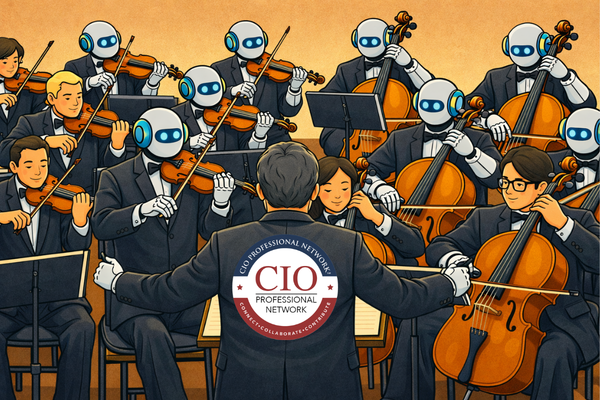
The CIO Professional Network, the private CIO, CISO, and CTO community for The National CIO Review, convened another roundtable discussion to openly examine the realities behind emerging trends. In this session, led by member Kiran Palla, the dialogue focused on what it takes to move toward an AI-orchestrated enterprise. Participants considered what orchestration entails and aspects CIOs must address before layering automation and AI across their respective organizations.
The conversation addressed the importance of foundation, vendor strategy, pricing shifts, generational workforce dynamics, and the growing need for compatibility across platforms.
Orchestration is not optional. Progress depends on establishing a coordinated framework where systems, agents, and data operate securely and with clear intent.
Why It Matters: Building an AI-orchestrated enterprise requires discipline over experimentation. Budgets remain limited, integration efforts are intensive, and expectations around AI performance continue to climb. Boards and executive leaders are seeking measurable advancement in automation and platform alignment. The Roundtable reinforced the view that orchestration outcomes will depend more on deliberate design and stewardship than on the volume of AI tools implemented. Leaders who establish integration guardrails early and align teams around shared standards will move ahead with greater assurance than those expanding automation without cohesion.

- AI Is Moving Into Core Workflows: Conversation began by outlining AI’s expansion into multi-agent workflows and more advanced decision systems. Major vendors now promote orchestration frameworks embedded within their platforms. Several participants noted that containment presents a challenge because each platform’s orchestration model operates primarily within its own ecosystem. Some observed that agents in one environment rarely collaborate seamlessly with those in another, resulting in siloed automation, repeated logic, and rising integration expense. Members acknowledged that although directionally clear, many organizations struggle because the fully orchestrated model remains abstract. The opportunity lies in establishing a layer that enables cross-platform coordination rather than reinforcing these vendor silos.
- Engineering Governance Into the Architecture: Concerns were raised about compliance exposure as automated agents interacting across systems introduce accountability challenges. Audit logging and control mechanisms must reside within the architecture itself, especially in regulated environments. Participants discussed containerized deployment, zero-trust enforcement, PII redaction, and embedded monitoring controls. The group aligned on the point that governance must exist within the orchestration framework and cannot be layered on post-deployment.
- Interoperability Is Becoming Central: Interoperability emerged repeatedly during the session as vendors increasingly recognize customer demand for integrated ecosystems. Attendees questioned how partnerships are evolving across cloud and enterprise platforms. Members shared examples of collaborative vendor discussions structured around integration and coordinated deployment, reinforcing that organizations introducing a neutral orchestration layer gain flexibility in vendor engagement. The dialogue suggested that integration maturity is influencing enterprise purchasing decisions.
- Data Readiness Remains Foundational: The group was reminded that data challenges existed long before AI and how poor structure limits automation impact. Emphasis was that orchestration relies on consistent data models and reliable pipelines. Many enterprises are dedicating significant efforts to data preparation before expanding automation initiatives. Participants added that decisions around hosting environments and model selection introduce additional data considerations. Consensus formed that orchestration advances only as far as data governance allows.
- Pricing Models Are Evolving: The conversation also addressed vendor economics. Attendees explained that providers are gravitating toward agent-based pricing tied to productivity gains. Members observed that this structure attempts to connect cost to performance outcomes. Still, questions surfaced regarding how much financial risk vendors assume within such arrangements. CIOs now confront decisions outside technical capability such as pricing assumptions, projected savings, and implementation dependencies that require careful evaluation.
- Workforce Readiness Requires Attention: Discussion tackled the generational differences in communication style and workflow expectations with anecdotes shared about hiring recent graduates with strong AI skills but limited exposure to enterprise architecture frameworks. The group discussed how these dynamics introduce new leadership responsibilities and challenges connecting architectural discipline with modern AI development approaches. Coaching, context, and expectation alignment remain vital for sustained advancement.
- Orchestration Requires an AI-First Mindset: Participants emphasized that orchestration begins with organizational problem framing. Instead of defaulting to new product acquisition, teams have to be encouraged to asses existing data, internal processes, and current systems before expanding the tool portfolio. Several members agreed that without this mindset, orchestration drifts into fragmented automation efforts. Building internal AI discipline changes vendor conversations and strengthens architectural decisions.